Sunday 1 November 2026
Where We Stand: Housing, Mental Health and the Environment in Ottawa
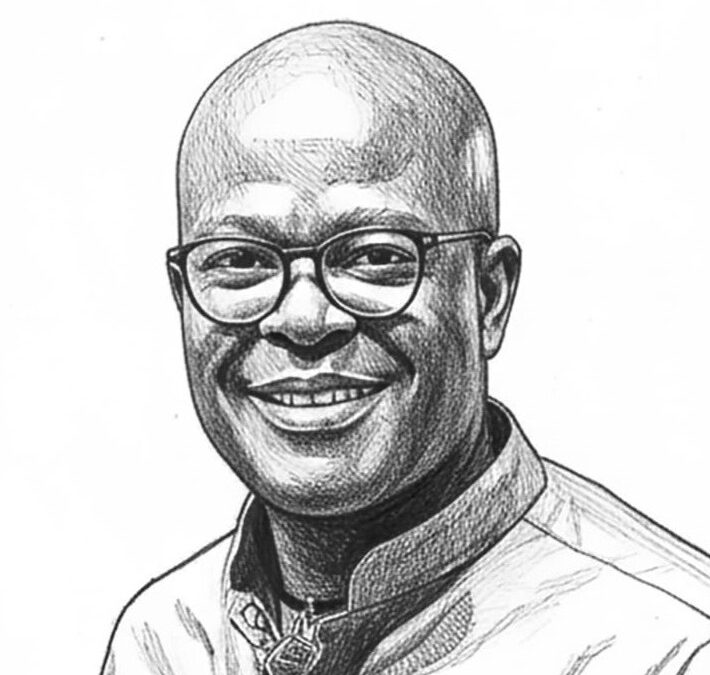
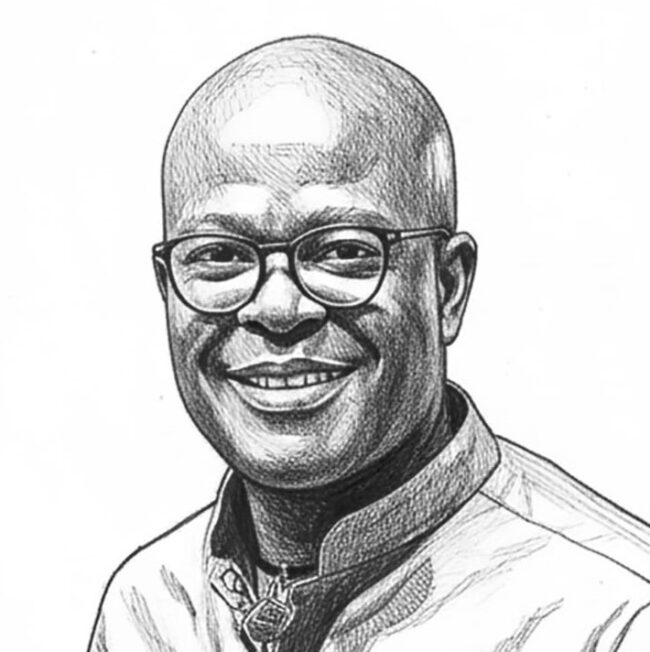
By Dr. Andy Kusi-Appiah
“Harmony between the material and the spiritual is sought as a comprehensive, holistic well-being in harmony with life.”
-Simón Yampara Huarachi (2001, as cited in P2P Foundation, n.d.).
—
Introduction:
A dear friend recently told me, “…the truth is always one, and it stands!” Over the past year, teaching the undergraduate course GEOG 2023A, Cities, Inequalities and Urban Change, and serving as President of the Board of Directors at Upstream Ottawa, I have come to appreciate a distinction: the facts may be singular, but the truths through which we experience them are multiple. Where we stand shapes what we see, how we interpret it, and what it means to us.
I anchor this column in the Aymara concept of suma qamaña, originating in the Andes of South America and commonly translated as living well or good living. Aymara philosopher Simón Yampara Huarachi (2001) interprets it as a pursuit of holistic well-being and harmony between the material and spiritual dimensions of existence (as cited in P2P Foundation, n.d.). At its heart, suma qamaña expresses a relational understanding of life in which individual well-being cannot be separated from the well-being of the wider community and the natural world.
Costoya (2013) similarly examines suma qamaña as an alternative understanding of development grounded in Indigenous Andean worldviews and the idea of living well together. This resonates with Kenyan-born philosopher John Mbiti’s understanding of African communal existence: “To be human is to belong to the whole community” (Mbiti, 1969). It also finds an affinity with Ubuntu: “I am because we are.” These are distinct philosophical traditions, but they share an important recognition: human existence is fundamentally relational.
Leanne Betasamosake Simpson, a Michi Saagiig Nishnaabeg scholar, writer and artist, locates Indigenous political resurgence in distinctively Indigenous ways of theorizing, writing, organizing, and thinking (Simpson, 2017). This speaks to what Donna Haraway challenges through her critique of the “god trick of seeing everything from nowhere” (Haraway, 1988). Her concept of situated knowledges reminds us that knowledge is produced from particular social, historical, and embodied positions. Kyle Whyte extends this conversation by demonstrating how Indigenous understandings of climate change must account for both histories of environmental adaptation and the continuing disruptions of colonialism (Whyte, 2017).
Facing the Past to Build a Just Future:
Consider the facts. According to the Canada Mortgage and Housing Corporation (CMHC, 2024), Ottawa’s purpose-built rental apartment vacancy rate increased from 2.1% in 2023 to 2.6% in 2024. The average rent for a two-bedroom apartment reached $1,880, an increase of 5%. More strikingly, rents increased by 23.8% for apartments turning over to new tenants, compared with 2.2% for renewed leases.
That is one set of facts, but not the whole truth. Consider the difference between standing as a homeowner in Barrhaven, where homeownership may represent equity and financial security, and standing as a Black newcomer at Upstream Ottawa’s offices, searching for a room to rent for $800. Both experiences belong to the same city, yet they reveal profoundly different relationships with its opportunities and resources. Where we stand shapes how we experience Ottawa.
My association with Upstream Ottawa has also taught me that mental health is not simply what happens inside our heads; it is shaped by what happens outside them. Housing insecurity, for instance, can mean living in perpetual survival mode, where immediate needs overshadow the possibility of planning for tomorrow. The resulting stress is not necessarily personal failure or an inability to cope; it can be a consequence of structural inequality and, in a very real sense, environmental injury. The conditions of the city can make people unwell, just as they can create the conditions in which people flourish.
And this brings me to one of my favourite subjects: the environment. Ottawa’s Climate Change Master Plan, approved on January 29, 2020, establishes a target of reducing community-wide greenhouse gas emissions by 100% by 2050 and identifies eight priority actions for 2020-2025 (City of Ottawa, 2020). Yet where we stand determines how we experience climate change and whether we can participate meaningfully in its solutions. As Whyte reminds us, anthropogenic climate change intensifies environmental disruptions that Indigenous peoples have historically experienced through colonialism (Whyte, 2017). Climate action, therefore, cannot be separated from questions of history, power, and justice.
Living Well Together:
This brings me back to suma qamaña: living and coexisting in integral harmony. Its philosophical lesson is that development should not be about living better than others at their expense, but about creating the conditions in which we can live well together. A city cannot claim to be thriving when prosperity for some coexists with homelessness, precarious housing, and environmental injustice for others.
The Aymara offer another profound teaching through their understanding of time. In Aymara temporal thinking, the past is conceived as being in front of us (nayra), while the future is behind us (qhipa) (Núñez & Sweetser, 2006). What we have experienced is visible; what is yet to come remains unseen. This reverses the familiar Western metaphor of leaving the past behind and moving towards the future. It suggests that we must look carefully at where we have been if we hope to shape where we are going.
Ottawa’s histories of housing exclusion, environmental racism, colonial dispossession, and mental health stigma are our nayra, visible before us, if we are willing to look. They must inform the qhipa (the future) we seek to create. If we want a just, sustainable, and healthy city, we simply cannot move forward by turning our backs on the past. We must first have the courage to see it, acknowledge it, and learn from it.
Perhaps the question is not simply what kind of city Ottawa wants to become, but whether Ottawans are prepared to confront the past before our eyes and use its lessons to create a city in which we can genuinely live well together.
Works Cited:
Canada Mortgage and Housing Corporation. (2024). Rental market report: Fall 2024. https://assets.cmhc-schl.gc.ca/sites/cmhc/professional/housing-markets-data-and-research/market-reports/rental-market-report/fall-2024/rental-market-report-fall-2024-en.pdf
City of Ottawa. (2020). Climate change master plan. https://ottawa.ca/en/planning-development-and-construction/official-plan-and-master-plans/climate-change-master-plan
Costoya, M. M. (2013). Latin American post-neoliberal development thinking: The Bolivian ‘turn’ toward Suma Qamaña. The European Journal of Development Research, 25(2), 213–229. https://doi.org/10.1057/ejdr.2012.41
Haraway, D. (1988). Situated knowledges: The science question in feminism and the privilege of partial perspective. Feminist Studies, 14(3), 575–599. https://doi.org/10.2307/3178066
Mbiti, J. S. (1969). African religions and philosophy. Heinemann.
Núñez, R. E., & Sweetser, E. (2006). With the future behind them: Convergent evidence from Aymara language and gesture in the crosslinguistic comparison of spatial construals of time. Cognitive Science, 30(3), 401–450. https://doi.org/10.1207/s15516709cog0000_62
P2P Foundation. (n.d.). Buen vivir: Suma qamaña. https://wiki.p2pfoundation.net/Buen_Vivir
Simpson, L. B. (2017). As we have always done: Indigenous freedom through radical resistance. University of Minnesota Press. https://doi.org/10.5749/j.ctt1pwt77c
Whyte, K. (2017). Indigenous climate change studies: Indigenizing futures, decolonizing the Anthropocene. English Language Notes, 55(1–2), 153–162. https://doi.org/10.1215/00138282-55.1-2.153
Andy (Kwaku) Kusi-Appiah is a community leader, political ecologist, researcher, lecturer/educator based in Ottawa. A former president of the Ghana Association of Ottawa (Andy served as president for two terms), he is deeply committed to serving his community, mentoring young leaders and fostering dialogue among African and Caribbean diasporas in Canada. His work explores leadership, sustainability, and community renewal.