
“Cultivating Cultural Infrastructure for Environmental Stewardship.”
By
Andy (Kwaku) Kusi-Appiah
Abstract
This essay argues that culture must be understood as infrastructure for environmental stewardship. Moving beyond technocratic sustainability models, it draws on Black and diasporic scholarship to demonstrate how cultural narratives, language, and collective memory function as adaptive systems for ecological resilience. Centering marginalized epistemologies is not symbolic inclusion; it is foundational to sustainable and just environmental futures.
Keywords: cultural infrastructure, Afrocentric ecology, traditional ecological knowledge, sustainability.
Introduction:
Environmental policy often emphasizes regulation, innovation, and market mechanisms. These tools matter. Yet biodiversity loss and environmental injustice persist not merely because of technological gaps, but because of deeper fractures in how societies understand their relationship to the Earth. Environmental harm is tied to worldview.
This essay advances a central claim: culture itself is infrastructure. Culture shapes perception, governs behaviour, transmits ecological knowledge, and sustains collective responsibility. Without cultural grounding, sustainability initiatives risk becoming externally imposed, short-lived, or disconnected from lived realities.
Beyond policy, toward meaning:
For Black communities in Ottawa and throughout the diaspora, environmental harm intersects with histories of displacement, extractivism, and racial inequality. As Robert D. Bullard (1990) demonstrates in Dumping in Dixie, environmental risk is not randomly distributed; it follows lines of race and power. Ecological resilience must therefore be culturally anchored and justice oriented.
Culture as living infrastructure:
Anthropologist Edward Burnett Tylor (1871/1920) defined culture as a ‘complex whole’ of knowledge, belief, art, morals, and custom. While foundational, contemporary Black and Caribbean thinkers move toward a dynamic understanding of culture as a living system.
Sylvia Wynter (2003) argues that Western modernity constructed a genre of “Man” positioned as rational and detached from nature. This colonial epistemology normalized ecological domination. Environmental degradation is thus embedded in worldview.
Similarly, Malcom Ferdinand (2022) contends in A Decolonial Ecology that ecological crisis cannot be separated from slavery and plantation economies in the Caribbean. The plantation functioned as economic, racial, and ecological system built on extraction and dispossession. Sustainability must therefore confront coloniality alongside carbon emissions.
Black diasporic ecological ethics:
Across many African cosmologies, relationality is foundational. Kenyan philosopher John S. Mbiti (1969) writes, “I am because we are.” Often associated with Ubuntu philosophy, this ethic extends beyond human society to ancestors, land, and future generations.
This relational ethic found practical expression in the work of Wangari Maathai (2003), founder of the Green Belt Movement. Maathai (2003) describes tree planting not simply as reforestation but as civic education, women’s empowerment, and democratic renewal. Ecological restoration was inseparable from justice.
In the Caribbean, environmental memory is embedded in language and landscape. Kamau Brathwaite (1984) described “nation language” as shaped by oceanic rhythms and plantation history. Édouard Glissant (1997) proposed that identity emerges through “relation,” emphasizing interdependence rather than isolation.
Literature as ecological archive:
Caribbean literary scholar Elizabeth DeLoughrey (2019) argues that island literatures serve as environmental archives, recording hurricanes, rising seas, and extractive violence. Stories preserve ecological memory that policy often overlooks.
African literature has long articulated environmental philosophies. In Things Fall Apart, Chinua Achebe (1958) portrays an Igbo cosmology structured around sacred land ethics. In The Healers, Ayi Kwei Armah (1978) imagines healing as collective restoration. In Decolonizing the Mind, Ngũgĩ wa Thiong’o (1986) argues that linguistic colonization erodes Indigenous knowledge systems embedded in language. Sustainability is thus a longstanding ethic carried through narrative.
Bridges and pipelines move goods. Culture moves conscience. The future of environmental stewardship will not be secured by policy alone. It will be sustained by cultural memory, relational ethics, and collective responsibility. If infrastructure supports life, then culture is the ground beneath our feet.
Cultural infrastructure in practice:
The above mean that environmental engagement must be participatory, multilingual, and culturally resonant. In this respect, community gardens, for example, are not merely food systems but sites of intergenerational knowledge exchange. In the same vein, places of worship and community centre are ecological actors. It means youth environmental programming should incorporate storytelling, oral history, and diasporic ecological wisdom alongside STEM education.
Contemporary climate research increasingly affirms that locally grounded adaptation strategies , water stewardship practices, cooperative land care, agroecology, outperform purely top-down interventions over time. Traditional ecological knowledge and scientific research are not competitors; they are collaborators.
For marginalized communities, this integration also addresses environmental inequities: urban heat islands, inadequate green space, flood vulnerability, and food insecurity. Cultural infrastructure strengthens collective agency to confront these challenges.
Conclusion:
Bridges and pipelines move goods. Culture moves conscience. When we treat culture as infrastructure, we recognize that sustainability is remembered in proverbs whispered by elders, practiced in communal harvests, encoded in language, and revived in song. Environmental stewardship is inseparable from dignity and self-determination. Humans are not separate from the environment; we are expressions of it. What we do to rivers and forests, we do to ourselves. The future of environmental stewardship will not be secured by policy alone. It will be sustained by cultural memory, relational ethics, and collective responsibility. Our stories are not peripheral to sustainability; they are their foundation. And if infrastructure is what supports life, then culture is the ground beneath our feet.
Works Cited
Achebe, C. (1958). Things fall apart. Heinemann.
Armah, A. K. (1978). The healers. Heinemann.
Brathwaite, K. (1984). History of the voice: The development of nation language in Anglophone Caribbean poetry. New Beacon Books.
Bullard, R. D. (1990). Dumping in Dixie: Race, class, and environmental quality. Westview Press.
DeLoughrey, E. (2019). Allegories of the Anthropocene. Duke University Press.
Ferdinand, M. (2022). A decolonial ecology: Thinking from the Caribbean world (A. Brown, Trans.). Polity Press.
Glissant, É. (1997). Poetics of relation (B. Wing, Trans.). University of Michigan Press.
Maathai, W. (2003). The Green Belt Movement: Sharing the approach and the experience. Lantern Books.
Mbiti, J. S. (1969). African religions and philosophy. Heinemann.
Ngũgĩ wa Thiong’o. (1986). Decolonizing the mind: The politics of language in African literature. Heinemann.
Tylor, E. B. (1920). Primitive culture: Researches into the development of mythology, philosophy, religion, language, art and custom (Vol. 1). John Murray. (Original work published 1871).
Wynter, S. (2003). Unsettling the coloniality of being/power/truth/freedom: Towards the human, after man, its overrepresentation, An argument. CR: The New Centennial Review, 3(3), 257–337.
About the Author
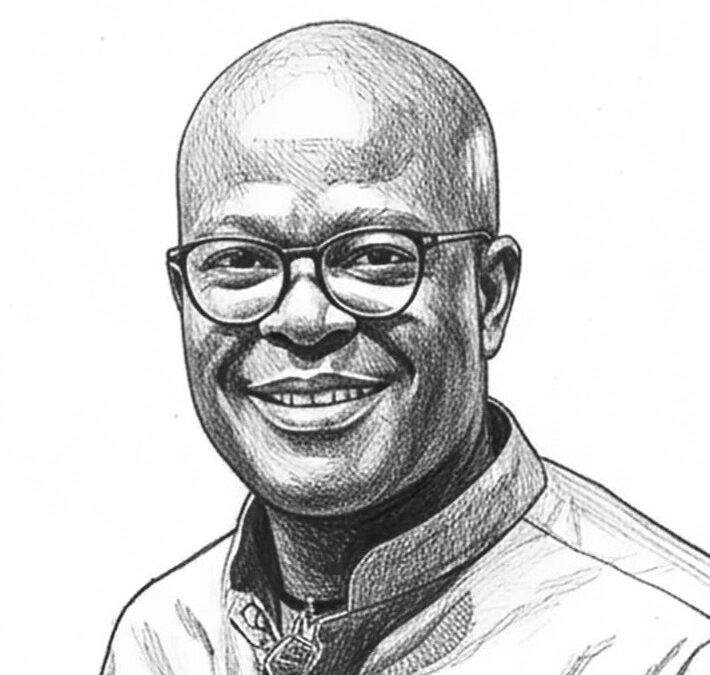
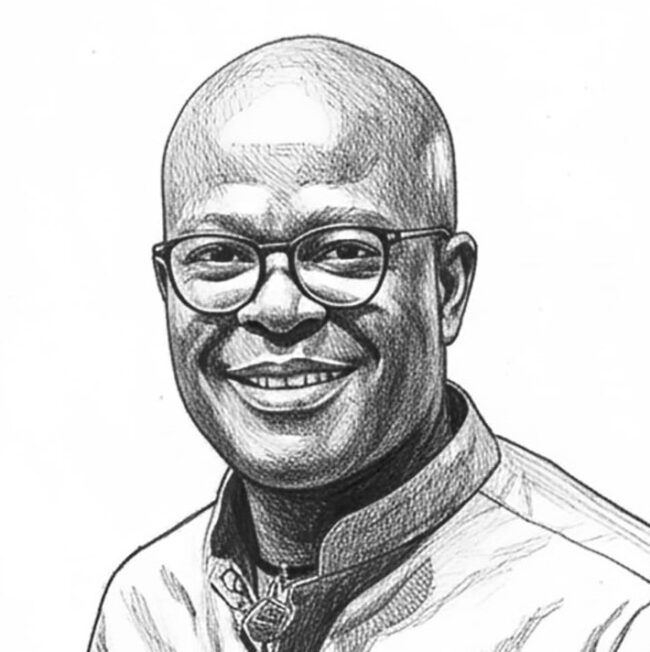
Andy (Kwaku) Kusi-Appiah is a community leader, political ecologist, researcher, lecturer/educator based in Ottawa. A former president of the Ghana Association of Ottawa (Andy served as president for two terms), he is deeply committed to serving his community, mentoring young leaders and fostering dialogue among African and Caribbean diasporas in Canada. His work explores leadership, sustainability, and community renewal.