
Thursday 1 October 2026
“Reconciliation is Rootwork, not Canopy: Why Integration Is Not Assimilation, and Why a 1452 Papal Bull Still Matters.”
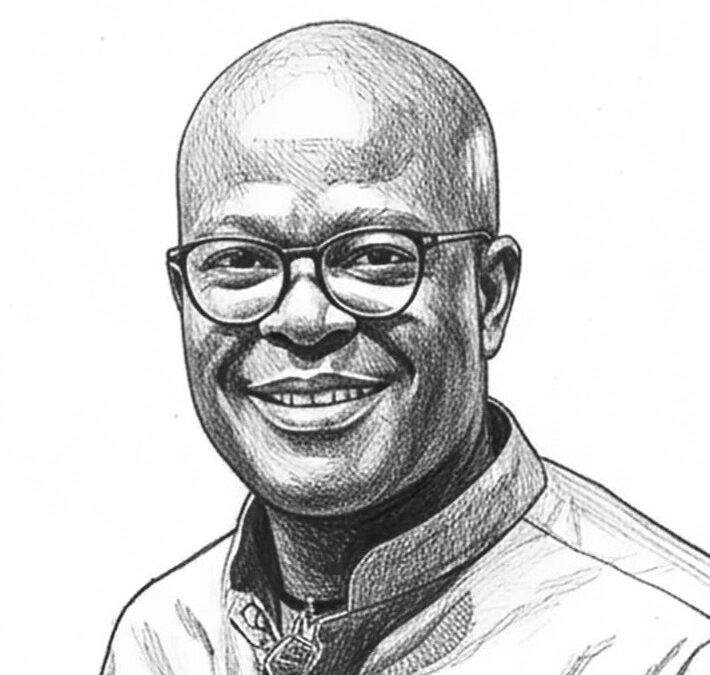
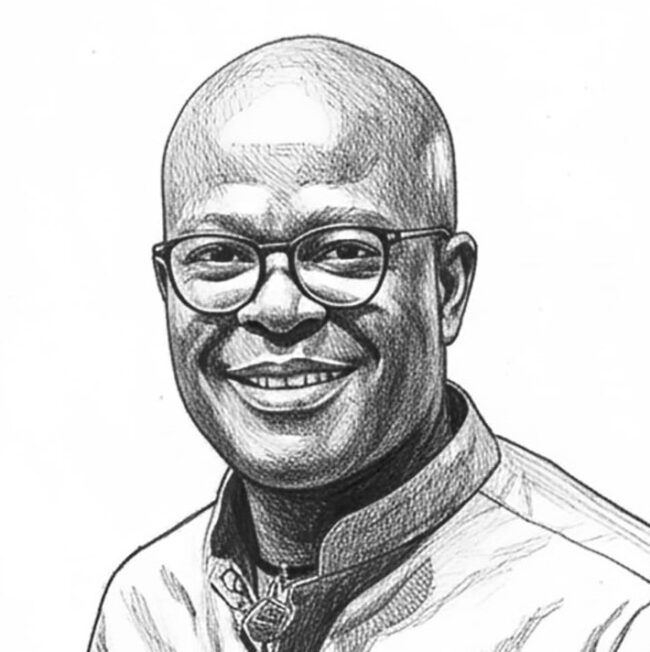
By
Andy (Kwaku) Kusi-Appiah, PhD.
—
“Land is alive and thinking and humans and non-humans derive agency through the extensions of these thoughts.”
Vanessa Watts, 2013
—
Introduction:
Yesterday Canada wore orange for the sixth time. We marked the National Day for Truth and Reconciliation, created after the Truth and Reconciliation Commission’s (TRC) 2015 report on residential schools that took more than 150,000 First Nations, Inuit and Métis children, and where more than 4,000 never returned (TRC, 2015). Today, the orange comes off, and for Black Ottawa, the question is sharper: “why are we reconciling, and what do we have to do with it?” The answer is buried in a 1452 Papal Bull.
Why we are here:
Reconciliation exists because in the past, Canada chose assimilation. Residential schools (1883-1996), funded by Ottawa and run by churches, had one ‘canopy’ goal, in Duncan Campbell Scott’s words: to “kill the Indian in the child” (TRC, 2015). Then came the apology in 2008. In 2015, Canada’s TRC called it cultural genocide and gave us 94 Calls to Action (TRC, 2015). Call to Action #80 gave us September 30th, to reconcile, to make bare the facts. We reconcile because assimilation failed.
I respect Ms. Nyadol of Australia’s outburst about assimilation. In Black communities, we know the pressure to make our differences smaller in order to belong. But assimilation and integration are not the same. Assimilation asks people to conform to dominant cultural norms, often at the expense of their languages, histories, identities, and ways of knowing. Integration, by contrast, allows people to participate fully in a shared society without becoming less of themselves; it recognizes that belonging can coexist with the retention, renewal, and contribution of diverse cultural roots.
It is from this distinction that I articulated my framework of ‘rootwork and canopy’ in Ottawa in September 2026 (Kusi-Appiah, 2026). ‘Rootwork’ is the ongoing cultivation, protection, transmission, and renewal of the cultural, historical, ecological, and relational foundations from which people participate in society. The ‘canopy’ is the shared social world created above those roots; the civic, cultural, and institutional space where different peoples meet, negotiate difference, and build something together. Integration, therefore, is not assimilation into a pre-existing canopy; it is the creation of a canopy sustained by many living roots. ‘Rootwork’ without a ‘canopy’ can become isolation; a canopy without roots can become conformity. Integration requires both: roots strong enough to sustain identity, and a canopy spacious enough for different peoples to belong without surrendering who they are.
The Papal bull:
‘Canopy’ did not start in Ottawa. It started in Rome. The legal root of both African slavery and Indigenous land theft is the Doctrine of Discovery, built on three bulls:
a) Dum Diversas (1452); Pope Nicholas V gave Portugal the right “to invade… and to reduce their persons to perpetual slavery” (Pope Nicholas V, 1452). This bull was about Africa;
b) Romanus Pontifex (1455) extended that right beyond Cape Bojador (Pope Nicholas V, 1455); and
c) Inter Caetera (1493); Pope Alexander VI gave Spain lands “discovered” not ruled by a Christian prince (Pope Alexander VI, 1493). These invented terra nullius (empty land) and discovery gives title (Miller et al., 2010).
This became law in 1823 in Johnson v. M’Intosh, 21 U.S. 543, and cited as recently as 2005 in City of Sherrill v. Oneida Indian Nation, 544 U.S. 197.
Canada’s Indian Act, reserves, residential schools, and the expropriation of farms for Ottawa’s Greenbelt in 1958-62 are children of these bulls. That is why TRC Call #49 called on faiths to repudiate the Doctrine (TRC, 2015).
Who is pushing back?:
Indigenous peoples have pushed for decades. In 2016, the Long March to Rome arrived at the Vatican on May 4th, 2016, Five hundred and twenty-three (523) years after Inter Caetera, demanding revocation. In July 2022, when Pope Francis came to apologize, two women unfurled a banner at Sainte-Anne-de-Beaupré: “Rescind the Doctrine.”
On March 30, 2023, the Vatican formally “repudiates those concepts that fail to recognize the inherent human rights of Indigenous peoples, including what has become known as… ‘doctrine of discovery'” (Dicastery for Culture and Education & Dicastery for Promoting Integral Human Development, 2023, para. 2). It admitted that the bulls “did not adequately reflect the equal dignity and rights of Indigenous peoples” (Dicastery for Culture and Education & Dicastery for Promoting Integral Human Development, 2023, para. 5). But the Vatican repudiated the Doctrine, not the bulls themselves. It cited Sublimis Deus (1537) as correction (Pope Paul III, 1537). Leaders called it a first step (Littlechild, 2023). Real pushback is ‘rootwork’, the daily refusal of imposed ‘canopy’.
What do Indigenous and African peoples share?:
We are children of the same bull. The same sentence that enslaved Africans said Indigenous lands were empty. One bull justified two crimes. Both had land relations severed by ‘canopy’ law. Indigenous by terra nullius. Africans by being made property, then told we have no land claim here. Both kept ‘rootwork’. For Algonquin territory, it is ‘Place-thought’. Watts (2013) writes, “land is alive and thinking and… humans and non-humans derive agency through the extensions of these thoughts” (p. 21). For Africans, it is ‘rootwork’
Hurston (1931) and Chireau (2003) documented healing with damp, hidden matter. Simpson (2017) tells of Binoojiinh learning maple sugar not by removal, but in love. Coulthard (2014) calls this grounded normativity, ethics from place, not state. Sustainability without repair is preservation of theft. It keeps the Greenbelt green while forgetting Algonquin families who never ceded it and Black labourers written out.
Integration is root-work:
Integration says: bring your orange shirt, your kente, your hijab, your braids, and let us live together with all those shirts. Assimilation says: leave it at home. Yesterday, Canada remembered. Today, we must repair it, not with a master plan, but by sitting in a barn at 8:35am at Maple Hill Urban Farm, boots on, and working the damp again. As Leonard Cohen (1992) puts it, “There is a crack in everything. That’s how the light gets in.” (Cohen, 1992). That crack is where rootwork enters, it doesn’t enter on September 30th, it enters on October 1st. Black Ottawa, with our own ‘rootwork’ traditions, has much to teach this city about how to work the crack.
Works cited:
Chireau, Y. P. (2003). Black magic: Religion and the African American conjuring tradition. University of California Press. https://archive.org/details/blackmagicreligi0000chir/page/n7/mode/2up
Cohen, L. (1992). Anthem. On The future. Columbia Records. https://open.spotify.com/album/7E4FRoU4Pk0WuO1SQMV1Bo
Coulthard, G. S. (2014). Red skin, white masks. University of Minnesota Press.
Dicastery for Culture and Education & Dicastery for Promoting Integral Human Development. (2023, March 30). Joint statement on the doctrine of discovery. Vatican Press. https://press.vatican.va/content/salastampa/en/bollettino/pubblico/2023/03/30/230330b.html
Hurston, Z. N. (1931). Hoodoo in America. Journal of American Folklore, 44 (174), 317-417. https://people.duke.edu/~ldbaker/classes/gradtheory/Hurston-HoodooAmerica-1931.pdf
Kusi-Appiah, A. K. (2026). Root-work and canopy. Unpublished manuscript.
Littlechild, W. (2023, March 30). Response to Vatican statement. Assembly of First Nations. https://afn.ca/all-news/news/afn-response-to-the-vaticans-repudiation-of-the-doctrine-of-discovery/
Miller, R. J., et al. (2010). Discovering Indigenous lands. Oxford University Press.
Pope Alexander VI. (1493, May 4). Inter caetera.
https://www.gilderlehrman.org/history-resources/spotlight-primary-source/doctrine-discovery-1493
Pope Nicholas V. (1452, June 18). Dum diversas.
https://www.courthouselibrary.ca/how-we-can-help/our-legal-knowledge-base/doctrine-discovery
Pope Nicholas V. (1455, Jan 8). Romanus pontifex.
Pope Paul III. (1537, June 2). Sublimis Deus.
Simpson, L. B. (2017). As we have always done. University of Minnesota Press.
Truth and Reconciliation Commission of Canada. (2015). Honouring the truth, reconciling for the future.
Watts, V. (2013). Indigenous place-thought and agency. Decolonization, 2(1), 20-34. https://jps.library.utoronto.ca/index.php/des/article/view/19145
Andy (Kwaku) Kusi-Appiah is a community leader, political ecologist, researcher, lecturer/educator based in Ottawa. A former president of the Ghana Association of Ottawa (Andy served as president for two terms), he is deeply committed to serving his community, mentoring young leaders and fostering dialogue among African and Caribbean diasporas in Canada. His work explores leadership, sustainability, and community renewal.