
The Evolution of Ottawa’s Black Businesses
by David Tulloch
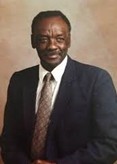
In 1976, Browns Cleaners, founded in 1957 by Herbert (Pops) Brown, a Jamaican immigrant, was the only black-owned business in the National Capital area. Today, Brown’s Cleaners, under new ownership, has many locations across the Ottawa area. But there are more than 150 Black-owned businesses in Ottawa listed in “Afrobiz,” an online business directory that provides a searchable listing of businesses in Ontario. “Ottawa has a diverse, vibrant community of Black-owned businesses spanning restaurants, retail, beauty, and professional services.” Brown’s Cleaners catered to the general population, but many of today’s black-owned businesses in Ottawa are ethnic-focused. This is especially true in the food services segment, primarily restaurants and grocery stores.
The emergence and growth of black-owned businesses in Ottawa tracked the growth of the city’s black population. Caribbean immigrants were the first predominantly black group to make Ottawa their home. This began with the arrival of Domestic workers in the mid 1950’s. But until 1970, some 15 years after Caribbean immigrants arrived in Ottawa, the “Top Bananas”, a fruit and vegetable outlet on William Street in the Byward Market, was the only place where Caribbean immigrants could find any semblance of ethnic products. And the selection was extremely sparse. As Ottawa’s Caribbean immigrant population grew, so did the demand for ethnic food products. And since Montreal and Toronto had larger black populations, Caribbean products were more available in these cities. Therefore, many of Ottawa’s Caribbean immigrants traveled to these centers to shop for their most basic ethnic dietary needs.
By the mid 1970s, Ottawa’s Caribbean population had reached a critical mass to support ethnic retail businesses. And in 1976, three Caribbean immigrants, part-time businessmen, Eric Samuels, a Health Canada employee with a PhD in Biochemistry, along with two of his colleagues, Mr. Henry Cadogan and Mr. Rawle Scott, opened the first Caribbean grocery store, SCS Tropical Enterprises, on Bank Street at Grove Avenue. Hence, the need to travel afar for these items no longer existed. The store subsequently moved to the Byward Market and, finally, relocated to Bank at Argyle, re-branded as Otahiti, with Samuels as the sole owner.
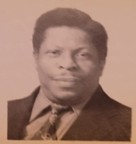
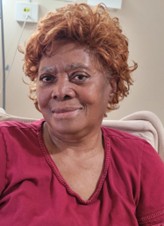
Three years later, in 1979, the Negril Tropical Mart opened its doors at 787 1/2 Somerset Street near Booth, establishing the second grocery store to serve the Caribbean immigrant community in Ottawa. Alfred Brown, a Carpenter by trade and a distant relative of Herbert (Pops) Brown, recognized that the immigrant community was large enough to support another grocery store serving Ottawa’s burgeoning Black community, which was still predominantly of Caribbean ethnicity. Alfred had the entrepreneurial drive, but he lacked the business acumen to ensure success. He engaged his cousin, Thelma Mills, Herbert’s niece, to handle the bookkeeping and administrative tasks while he and his wife, Madge, handled the operations.
Ottawa’s black population continued to grow, and by 1980, it was approximately 87% Caribbean. These two retail outlets thrived. They became social centres for Caribbean immigrants and the primary advertising hubs for cultural activities, always stacked with flyers promoting events staged across the city. They were also distribution centres for Caribbean newspapers and casual meeting places for Caribbean immigrants on their shopping trips.
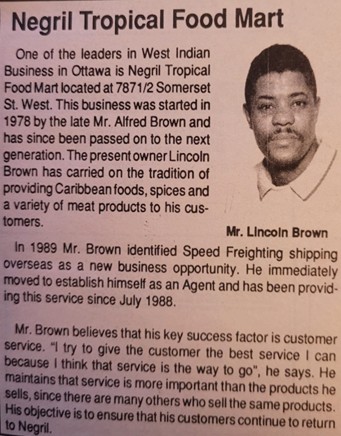
Otahiti and Negril Tropical Food Mart maintained a duopoly on Caribbean groceries for several years, until Big Buds, a mainstream discount store on Bank Street, recognized the ethnic market and began stocking items previously exclusive to the Caribbean duopoly at discounted prices. While this new competition siphoned off some of the ethnic customers, Caribbean immigrants’ loyalties remained steadfast, and both stores continued to operate unabated.
Alfred Brown operated the store until his death in 1989, at which time his son, Lincoln, took the reins, with his cousin, Thelma, continuing to provide administrative support. Negril Tropical Mart continued to serve Ottawa’s Black immigrant community up until 1993, when the store was destroyed by a fire of an unknown origin. While operating his store, Lincoln recognized another business opportunity that would serve the Caribbean immigrant community and added that to his portfolio. Lincoln Brown’s speed freight business enabled immigrants to ship barrels loaded with food, clothing, and other necessities to families in their home countries. Lincoln Brown passed away in November 2025. His cousin Thelma Mills provided much of the historical content for this article.
In 1994, on the heels of Negril Topical Mart’s demise, the Savannah Afro Caribbean Products opened its doors at 1838 Bank Street, filling the gap. Savannah continues to operate to this day, some 32 years later. Since then, numerous ethnic retail outlets have emerged, serving primarily Caribbean and African clientele, and, more importantly, native Canadian customers have also become loyal customers of these establishments. Mainstream businesses have also recognized this marketing opportunity, and ethnic food products are current staples on the shelves of the major supermarket chains across Ottawa.
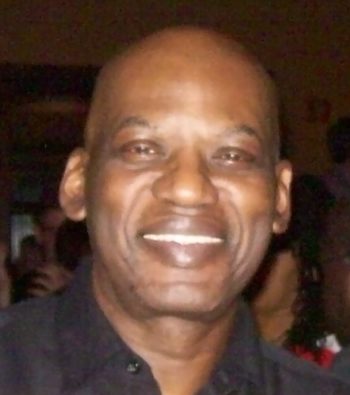
Dave Tulloch was born in Jamaica. He immigrated to Canada in 1970 to pursue post-secondary education. He earned a diploma in electronics engineering technology from Algonquin College, a Bachelor of Administration and a Bachelor of Commerce (Hon) from the University of Ottawa, and a Master of Business Administration from Concordia University. He has had an extensive career in information technology; as a computer engineer with Digital Equipment, an information systems consultant with Systemhouse, KPMG, and then with Oracle Corporation in the USA where he retired as a director in the Oracle Cloud Services Organization. He taught information systems and business courses at CEGEP (Hull) and later tutored at Wake Tech College in North Carolina. Dave wrote many articles for the Ottawa Spectrum, a publication focussing on Ottawa’s Visible Minority community within Ottawa during the 1980s and 90s. Dave’s publication of the book entitled Ottawa’s Caribbean Community – History and Profiles since 1955, documents the history of Blacks in Ottawa and the life stories of early Caribbean Immigrants to Canada’s Capital City. This book is being distributed by Amazon worldwide, by the publisher at petrabooks.ca, and it can be purchased from major book resellers including Indigo in Canada and Barnes & Noble in the USA where it was promoted as one of the best books in 2023.