
Date of publication: Friday 1 August 2025
“The Purpose of Life: Reflections on Culture, Community, & Environmental Stewardship.”
By
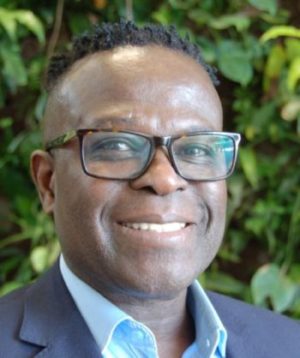
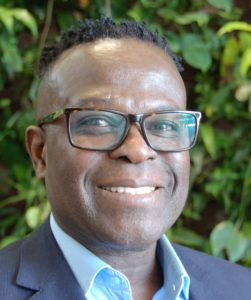
Andy (Kwaku) Kusi-Appiah
environmental philosopher/political ecologist
——————————————
“Today…,life must be characterized by a sense of universal responsibility, not only a nation to nation & human to human, but also human to other forms of life.”
Dalai Lama
“We are on Earth to take care of each other.”
Xiye Bastida Patrick[1], born April 2002
——————————————-
Abstract
This article explores the concept of life’s purpose through the lens of cultural expression, community engagement, and environmental stewardship within the context of Ottawa’s Black community. Drawing on personal experiences attending the Ghana Festival in Ottawa, engaging with Maple Hill Urban Farm, and participating in diverse faith-based services, including at the Chosen Bible Church and the Ottawa Sikh Society, this reflective piece argues that our deepest purpose lies in caring for the Earth and all its inhabitants. It examines how cultural pride, collective well-being, and sustainability are deeply intertwined, offering a uniquely Black Canadian perspective on living a life of meaning.
Keywords: purpose in life, Black community, culture, environmental stewardship, Ottawa, Ghana Festival, sustainability.
Introduction:
What is the purpose of life?
The above quotes emphasizes the interconnectedness of our responsibilities, highlighting that caring for the planet and its inhabitants, including our non-human cousins, is a fundamental part of our existence. As a Canadian of Ghanaian descent, and an environmental philosopher living in Ottawa, I find the question about the purpose of life both personal and communal. Growing up in Ghana, I was surrounded by cultural values that emphasized community, service, and a deep respect for the Earth. These values followed me to Canada and continue to inform how I experience life in Ottawa’s vibrant Black community.
Recently (last month), I had the opportunity to attend the Ghana Festival (GhanaFest) in Ottawa, visit Maple Hill Urban Farm, and take part in worship services at Chosen Bible Church, the Ottawa Sikh Society, and the Hindu Temple of Ottawa-Carleton. These experiences triggered a profound reflection on life’s purpose, especially in relation to community life and environmental care among Black Canadians.
Philosophers such as Viktor Frankl (1946) and Rollo May (1953) have written extensively on life’s meaning, linking it to well-being, fulfillment, and even survival. But for Black communities, especially those navigating life in the diaspora, purpose often extends beyond individual introspection. It is bound up with history, resilience, and cultural continuity.
In Ottawa, the Black community, diverse in heritage, language, and lived experience, expresses purpose through celebration of culture, communal support, and a deep-rooted care for the land and each other. Yet this connection between purpose, culture, and environmental stewardship is often overlooked in mainstream discourse. This article is a step toward bridging that gap.
Culture, Community, and the Earth: A Black Ottawa Experience
GhanaFest: Where Culture Meets Community
The Ghana Festival in Ottawa (aka GhanaFest) is more than a cultural showcase, it is a living expression of identity, resilience, and community care. Amid the drumming, dancing, and delicious bofroat and kyinkafa de waakye (authentic Ghanaian food), what struck me most was the sense of belonging. Elders passed on stories, children learned dances, and vendors sold handmade crafts, all signaling that culture is a living archive of purpose.
For many in Ottawa’s Ghanaian and broader African-Caribbean communities, festivals like this are not just entertainment, they are a form of environmental stewardship, preserving Indigenous knowledge (yes, you are Indigenous to Africa), traditions, and values that teach us to live harmoniously with the Earth and each other.
Maple Hill Urban Farm: Grounding Purpose in the Soil
My visit to the Maple Hill Urban Farm (200 Moodie Drive, Ottawa) reconnected me with the land in a deeply spiritual way. Farming, an ancestral practice for many in the Black community, is more than agriculture; it is an act of reclaiming space, nurturing life, and restoring balance.
Black-led urban farming initiatives in Ottawa (and across Canada) are increasingly becoming safe spaces for intergenerational learning, food security, and healing. Working with the soil reminds me that environmental stewardship is a sacred calling. It affirms that our survival, our health, and our sense of purpose are rooted in our relationship with nature.
Worship & Spiritual Practices: Anchors of Meaning
At The Chosen Bible Church in Ottawa (TCBC), the spirited worship was both celebratory and contemplative. Scripture readings, testimonies, and communal prayer created an atmosphere of gratitude and interconnectedness. I also participated in Sikh and Hindu services, where the emphasis on service (seva) and unity with creation resonated with African spiritual philosophies, such as Ubuntu: “I am because we are.” The power of Ubuntu is that it does not end with one victory. It lives on in the stories we tell, in the lessons we pass down, and in the way we choose to show up for others, including our non-human cousins (Kusi-Appiah, 2025). These experiences highlighted that purpose is spiritual – it thrives in rituals, music, service, and storytelling. Black spirituality, often shaped by faith, struggle, and hope, serves as a compass guiding many toward lives of dignity and care for others, including the Earth.
Environmental Stewardship: A Cultural Responsibility:
Environmental stewardship is not a modern invention, it is a way of life deeply embedded in African and Afro-Caribbean worldviews. From traditional farming techniques to proverbs that teach respect for water, trees, and animals, our cultures have long recognized that humans are not above nature but part of it. Leopold (1949) and Naess (1973) speak of eco-centrism and the ‘land ethic,’ but these concepts echo what our elders have always known: we must honour the Earth not because it is useful, but because it is sacred (source)
In a time of climate change, gentrification, and ecological degradation, Black communities in Ottawa are quietly leading through community gardens, food co-ops, waste reduction, and education initiatives, all forms of purpose-driven action rooted in our cultural values.
Purpose Is Interconnected:
Reflecting on these experiences, I identified four interconnected dimensions of life’s purpose within the Black Ottawa context, including cultural preservation, community belonging, spiritual anchoring and ecological stewardship.
To begin with, we must acknowledge that purpose is found in maintaining and celebrating our heritage. Secondly, our sense of meaning is amplified by collective well-being and interdependence. Thirdly, faith practices help us situate ourselves in a larger story of compassion, hope, and service, and finally, caring for the environment is a moral and cultural obligation, not just a western scientific necessity.
And So What?
In a world preoccupied with material success, individualism, and fast-paced living, the Black community in Ottawa offers a counter-narrative: that purpose is communal, cultural, spiritual, and ecological.
We are reminded that taking care of the land, honouring our ancestors, raising children with values, and practicing faith are not distractions from life’s purpose, they are life’s purpose!
This perspective has profound implications for how we build cities, design education, support youth, and protect the environment. It challenges policymakers, educators, and leaders to look beyond metrics and embrace meaning.
The implications of this are enormous, and we recommend the following:
Support Cultural Festivals and Spaces: Government and private institutions should invest in Black-led cultural events and community hubs that affirm identity and foster belonging.
Fund Urban Agriculture and Environmental Initiatives: Increase support for Black-led urban farming, sustainability education, and eco-friendly enterprises.
Integrate Spiritual Well-being into Community Health: Recognize the importance of faith-based and spiritual spaces in fostering resilience, purpose, and mental health.
Adopt Afrocentric and Interdisciplinary Approaches: Encourage research, policy, and programming that reflect the lived experiences of Black Canadians and their ecological worldviews.
Amplify Black Environmental Voices: Black Canadians have long been involved in environmental care, yet their voices are often underrepresented. We must create platforms that amplify these narratives.
Final Thoughts:
The purpose of life may not lie in some far-off ideal, but in how we live with each other and our non-human cousins, right here, right now, in Ottawa. For Black communities, purpose is woven through culture, community, and care. It is in the dance at GhanaFest, the prayer at Sunday services, the hands digging in urban soil, and the elder’s story shared over a shared meal.
We honour these experiences, and we do more than live, we live with purpose!
Works Cited:
Ellis, C., & Bochner, A. P. (2000). Autoethnography, personal narrative, and personal reflexivity. In N. K. Denzin & Y. S. Lincoln (Eds.), Handbook of Qualitative Research (2nd ed., pp. 733-768). Sage Publications.
Frankl, V. E. (1946). Man’s Search for Meaning: An Introduction to Logotherapy. Beacon Press.
Gilligan, C. (1982). In a different voice: Psychological theory and women’s development. Harvard University Press. https://psycnet.apa.org/record/1993-98550-000
Kaplan, S. (1995). The Restorative Benefits of Nature: Toward An Integrative Framework. Journal of Environmental Psychology, 15(3), 169-182.
Kusi-Appiah, A. (2025). Embracing Challenge, Becoming Champions:
Ubuntu, ‘I am because we are.’ (forthcoming). Petra Books, Ottawa, Canada.
Leopold, A. (1949). A Sand County Almanac. Oxford University Press.
May, R. (1953). Man’s search for himself. W.W. Norton & Company.
Naess, A. (1973). The Shallow and the deep, long-range ecology movement. Inquiry, 16(1-4), 95-100.
Ryff, C. D., & Singer, B. (1998). The contours of positive human health. Psychological Inquiry, 9(1), 1-28.
Steger, M. F. (2009). Meaning in life. In S. J. Lopez & C. R. Snyder (Eds.), Oxford handbook of positive psychology (2nd ed., pp. 679-687). Oxford University Press.
Sullivan, W. C., Kuo, F. E., & Brunner, J. L. (2001). Views of nature and self-discipline: Evidence from inner city children. Journal of Environmental Psychology, 21(1), 49-63.
Waterman, A. S. (1993). Two conceptions of happiness: Contrasts of personal expressiveness (eudaimonia) and hedonic enjoyment. Journal of Personality and Social Psychology, 64(4), 678-691. WCED (World Commission on Environment and Development). (1987). Our common
[1] Xiye is a Mexican climate activist & member of the Indigenous Otomi community. She is one of the major organizers of “Fridays for Future”, New York City, and has been a leading voice of Indigenous & immigrant visibility in climate activism.