
Date of publication: Monday 1 December 2025
This article was first published in Canadian Association of Retired Persons (CARP) Action www.carp.ca on Wednesday 5 November 2025
BY KAREN BLISS
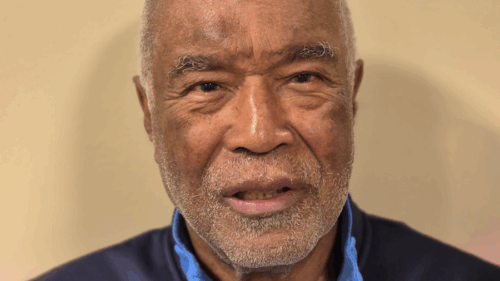
Carl Marshall is finally retiring, for real this time, retiring from his advocacy work for seniors with CARP’s Brampton, ON Chapter. He just stepped down after a decade as a board member.
“I don’t have the energy anymore and I’ve always believed that if you can’t give 100 percent, you shouldn’t be doing it,” Marshall, 84, tells CARP.
The married father and grandfather, who emigrated from Grenada to Toronto with his new bride in 1966, is looking forward to doing “nothing much, really. This was my last community effort,” he says of his CARP board work.
He leaves with no unfinished goals. “Towards the end of each calendar year, we would set goals for the upcoming year. I don’t think that there was anything that we did not implement.”
He says CARP maintains a good relationship with Brampton mayors past and present and was able to delegate at City Hall and accomplish a lot. “It was Brampton CARP who pushed the City to increase the services for seniors in parks, transit and areas like that.
“Also, one of the areas in which I take great pride is the fact that working with the Brampton Civic Hospital, William Osler Health System, we held a seniors’ fair with 60 to 70 companies that paid a fee to be there, and over the five or six years we raised just over $80,000. That allowed them to set up a special area within the Brampton Civic Hospital for seniors.”
Marshall and his wife didn’t have family in Canada when they chose to move here.
“We got married and we spent our first anniversary in Canada. I went to school, and we started a family and she worked. I’ve got three kids and six grandchildren, the first one is 25, the last one is 13,” he says.
“Most people from the Caribbean emigrated to either England or the U.S. We just did our research, and we chose Canada for a whole lot of reasons, and I don’t regret the decision to this day. Canada has been good to me and to my family.”
The couple first lived in Toronto, where he attended the Toronto Institute of Medical Technology from 1967 to 1970, studying to become a registered medical laboratory technologist. He landed a job that year at Toronto General Hospital as a medical microbiology technologist, moving to Brampton in 1973.
Six years later, he took a job as general manager of a private medical laboratory for two years. In 1981, he was hired as a medical laboratory inspector at The Ontario Ministry of Health’s Laboratory Licensing and Inspection Service, and was promoted to manager in 1985, a position he held for a decade.
Meanwhile, he earned his Certificate in Health Administration from York University over a five-year period. In 1995, he became associate director of the Ministry of Health’s Drug Programs Branch, until 2002.
“I took early retirement, but I did not want to stop working,” Marshall says. “So, after I retired, I did some consulting work for several years, and then I did some community work as well within Brampton. I was on different committees for seniors, the Ontario Seniors Games and the Canada Senior Games, which were hosted by the City of Brampton.”
Marshall first got involved with CARP in 2015, two years after the Brampton Chapter launched. The national not-for-profit advocacy group itself had formed in Canada in 1985, based out of Toronto.
A great friend of his, Terry Miller, one of the founders [he retired last year], invited him to join the board. Marshall was already familiar with the association because he had worked at the Ministry of Health for seven years until retirement.
“CARP was one of those organizations that we public servants in the Ministry of Health had this feeling that there were certain individuals from CARP back in the 80s and 90s who virtually slept at Queen’s Park,” Marshall laughs. “Because first thing in the morning somebody would get a call from the ADM’s [assistant deputy minister] office or the minister’s office saying, ‘We need a briefing note and such and such, CARP is here.’
“I worked with the [Ministry’s] drug benefit program and one of the issues was the access to prescription drugs, but also the co-pays. CARP was against most of the co-pays, and I remember just before I retired, one minister was warned that he would never hold office again in Ontario if he increased the co-pays for the low-income seniors. And lo and behold, the next election, he did not hold office again.
“Anyway, this was an amusing part in the sense that CARP was feared, literally feared, within the public service, especially the Ministry of Health, because this was where most of their activities took place with prescription drugs, OHIP [Ontario Health Insurance Plan] and things like that.”
Marshall was a major asset to CARP’s board because he knew the strategic way to get at issues within the Ministry, and he could pass on those regional learnings when dealing with the federal government.
“The priority area for us in CARP at that time was advocacy,” Marshall recalls.“One of the issues that I really am proud of — and Terry Miller would say the same — is that we, I’m pretty sure, were the first organization in Canada to advocate for dental care.
“In late 2016, I remember we had a meeting with the Brampton MPs, who at that time were all Liberal and we did presentations on national pharmacare and on dentalcare, and it gave us, the folks who were around at that time in Brampton CARP, great pleasure to see that the government eventually implemented a dental care plan. So, we felt really good about that.”
As he settles into bona fide retirement, Marshall says now it’s up to the current and future board of directors to figure out what’s next. All but two of the 12 original Brampton board members are still there; the rest retired as well.
“I’m still a member of CARP and I will be attending their general meetings because 10 months a year, we have a general meeting, at which our members are present, and we get different organizations to do presentations that we think are of interest to seniors,” he says.
“Usually, we have a very good turnout. For example, the last one, which was the annual town hall with the William Osler Health System, where the hospital gives us updates on issues and progress made in clinical improvements, even the building of the second hospital in Brampton, that is the premier event in October for the last several years – and over a hundred people turn out.”
While Marshall does plan on taking it easy, he will continue volunteering with Seaford Foundation, whose goal is to provide assistance to secondary schools and healthcare in Grenada.
“Over the past six years, we have provided musical instruments and funding for teachers to attend conferences in other [Caribbean] islands,” he says. “We also provided diabetes medication to be distributed to low income and poor residents free of cost. We are currently in the process of working with the Grenada Ministry of Health to determine what other medications that are needed.”
Carl Marshall’s’s departure from the advocacy role leaves an opening for the next generation of CARP members to continue the work and ensure the legacy of the last decade is maintained. Contact brampton@carp.ca to be part of the movement supporting seniors in Brampton.