

Saturday 25 April, 2026
Security Guards – bullet catchers at minimum wage
by Cal Lawrence
In the public imagination, security guards stand as the thin line between order and chaos in everyday spaces—shopping malls, transit hubs, office towers, and entertainment venues.
They are visible, uniformed, and symbolically authoritative. Yet beneath that image lies a troubling contradiction: many of these individuals are undertrained, under-equipped, and underpaid, asked to manage risks that can escalate far beyond their preparation.
When expectations exceed capability, the role begins to resemble something far more precarious—a “bullet catcher for minimum wage.”
This phrase is deliberately stark, but it captures a real tension in private security work across Canada. Guards are often deployed as deterrents, their presence meant to discourage theft, disorder, or violence. However, deterrence relies not only on visibility but on credibility—the perceived ability to respond effectively if something goes wrong.
Without proper training in verbal de-escalation, conflict management, and situational awareness, even the most well-intentioned guard may struggle to control a volatile situation. Words, in many cases, are the most powerful tool available. Yet communication training is frequently minimal, leaving guards to rely on instinct rather than skill.
The issue becomes more complex when considering physical intervention. Many guards are not equipped with intermediate use-of-force tools such as batons or conducted energy devices, and even where such tools are permitted, training standards can vary widely.
The result is a workforce caught in a paradox: expected to intervene, but constrained in how they can do so safely and effectively. This gap not only endangers the public but places guards themselves at significant risk. Without proper preparation, escalation can occur quickly, and a situation that begins as a minor disturbance can spiral into violence.
Compounding the problem is compensation. Security roles are often low-wage positions with high turnover.
When workers are paid at or near minimum wage, it sends a signal about how their role is valued. Yet these same workers may be the first to respond to emergencies—medical incidents, aggressive behavior, or even active threats—before police or paramedics arrive.
The mismatch between responsibility and reward raises ethical questions about labor expectations. If society relies on private security to maintain safety in public-facing spaces, should it not also invest in their training, equipment, and well-being?
There is also a structural dimension. Private security exists in a gray zone between customer service and law enforcement.
Guards are expected to be approachable yet authoritative, passive yet ready to act. This ambiguity can lead to inconsistent policies across sites and employers, further complicating decision-making in high-pressure moments. Clearer standards—particularly around use-of-force training, communication protocols, and duty of care—could help align expectations with reality.
Improving the situation does not necessarily mean turning every guard into a heavily armed enforcer.
In fact, many security experts argue that the most effective interventions are rooted in prevention: strong observational skills, cultural awareness, and advanced de-escalation techniques.
Investing in these areas can reduce the likelihood that force becomes necessary at all. Where higher-risk environments exist, specialized roles with enhanced training and compensation may be more appropriate than expecting baseline guards to fill that gap.
Ultimately, the phrase “bullet catcher for minimum wage” is less an indictment of individual guards and more a critique of the systems that shape their work. It highlights a disconnect between what is expected and what is provided. If security personnel are to play a meaningful role in public safety, they must be equipped not just with uniforms, but with the skills, support, and recognition their responsibilities demand. Otherwise, the uniform risks becoming little more than a symbol—one that conceals vulnerability rather than projecting strength.
It was only a matter of time before a security guard was killed or injured. Only when there are major changes as described above their only safe job is to observe and report.
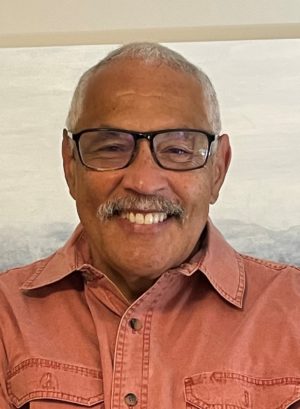
- Calvin Lawrence retired in 2006 from the Royal Canadian Mounted Police (RCMP) after twenty-eight years, and eight and half years with Halifax City Police. He was recognized as one of Nova Scotia’s outstanding citizens in Steve Kimber’s book: “More Than Just Folks”, 1998. He is currently a consultant on police-related subjects. He is the author of “Black Cop”.