
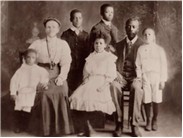
Ottawa’s Black History
by Dave Tulloch
The National Capital Area was unsettled until 1800 when Philemon Wright, an American Farmer from Woburn, Massachusetts, came to settle the area. Wright was accompanied by his family and four other families. He also brought 33 axemen to clear the forest areas and established a town bearing his name.
Historical records indicate that “Philemon Wright founded one of the Ottawa-Gatineau area’s first permanent settlements in the early 1800s by the Chaudière Falls and called it Wright’s Town (Wrightsville), now known as Hull (Gatineau).” However, one of the primaries in Philemon Wright’s pioneering group was a black man named London Oxford, described in the historical account as “a free negro”, whose wife and two children had died tragically earlier on. Records also indicate that Oxford, who resided in the region from 1800 to 1809, was the first “Black Settler in the Ottawa Valley.” But the fact that a black man was among the original settlers of the Ottawa-Gatineau area is rarely noted in the annals of Canadian history.
Twenty-six years later, Colonel John By was commissioned by the British government to supervise the construction of the Rideau Canal between today’s Ottawa and Kingston. The settlement on the Ontario side of the Ottawa River, then named Bytown, was incorporated as the City of Ottawa on January 1, 1855.
The second Black person arrived in the area around 1836, thirty-six years after Wright’s arrival. Robert Richardson from Connecticut, along with his Irish wife, Ellen, and six children, lived in Nepean, a settlement founded in 1792, eight years before Wrightsville. “The members of the Richardson family (identified as) “Coloured Persons- Negros”.”
Another fifty-two years would elapse before Perry Adams, the third Black person on record, arrived in the Ottawa area. Records indicate that Adams and his wife, Henrietta Joyce, baptized Frances, one of their children, at the Sussex Drive, Notre Dame Cathedral in 1844.
The fourth Black resident in the Ottawa area was Paul Barber. He came to Ottawa in 1845, when Ottawa’s population was about 11,000. Barber was a renowned horse trainer. He learned his craft from a Kentucky horse-training family to whom he was enslaved. Barber had accompanied this family on their regular visits to Ottawa to sell racehorses. Today. “Rue Barber,” a street in the Byward Market, bears his name.
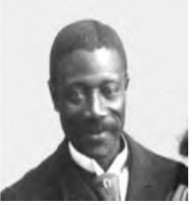
Then, in 1952, just over 100 years later, a pioneering Black man from the Caribbean arrived in the Ottawa area. Herbert (Pops) Brown, a Jamaican, moved to Ottawa from Montreal and became Ottawa’s fifth Black resident. Brown had previously settled in Montreal, arriving there in 1937 as a crew member on a cruise ship, and at a time when the war began. He joined the Canadian forces during World War II. Brown returned to Montreal after the war, learned the dry-cleaning business, and then moved to Hull in 1952. And in 1953, Brown’s family immigrated from Jamaica to be reunited with him at his Hull residence.
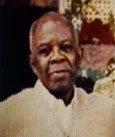
Brown’s Cleaners
Initially, Brown worked at the EB Eddy paper processing facility located on Eddy Street. Then in 1957, He opened a dry-cleaning store on Murray Street. This was the first black-owned business in the Ottawa-Gatineau area. Brown’s wife, Estelle, a seamstress, was the perfect complement for this family-owned business. She added garment adjustments and other tailoring services to the dry-cleaning operations. Over the next two decades, with its main outlet located on Bank Street, Brown’s Cleaners successfully expanded the business by establishing several other dry-cleaning locations across Ottawa until it was sold in 1978. Today, some 38 Brown’s cleaners are spread across the Ottawa area.
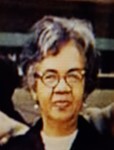
Shortly after the Brown’s family came to the Ottawa area, the Black demographic began to change. New immigrants from the Caribbean began arriving in Ottawa. The first contingent was a group of domestic workers. In August 1955, several Jamaican women came to Ottawa to work under the “West Indian Domestic Scheme”. This was an agreement between Canada and some Caribbean Islands to provide in-home help to families who could afford it. The first group of 72 arrived in Montreal. They were assigned to families in major Ontario cities, including Ottawa. Their agreement allowed them to become landed immigrants at the end of a two-year contract, after which they could sponsor family members to join them in Ottawa. Other such groups would follow over the ensuing years. This led to a continuous influx of immigrants from the Caribbean and created an environment in which ethnic businesses started to emerge, with Caribbean foods at the forefront.
The first of these food retail outlets was established in the early 1970s by three Caribbean part-time businessmen, Dr. Eric Samuels, Mr. Henry Cardogan, and Mr. Rawle Scott. The second such Caribbean food-focused enterprise was established in 1979 by Alfred Brown, a Jamaican immigrant and distant relative of Herbert Brown. Further insights into these two pioneering Ottawa black businesses are forthcoming.
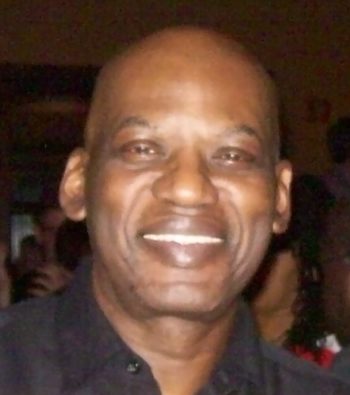
Dave Tulloch was born in Jamaica. He immigrated to Canada in 1970 to pursue post-secondary education. He earned a diploma in electronics engineering technology from Algonquin College, a Bachelor of Administration and a Bachelor of Commerce (Hon) from the University of Ottawa, and a Master of Business Administration from Concordia University. He has had an extensive career in information technology; as a computer engineer with Digital Equipment, an information systems consultant with Systemhouse, KPMG, and then with Oracle Corporation in the USA where he retired as a director in the Oracle Cloud Services Organization. He taught information systems and business courses at CEGEP (Hull) and later tutored at Wake Tech College in North Carolina. Dave wrote many articles for the Ottawa Spectrum, a publication focussing on Ottawa’s Visible Minority community within Ottawa during the 1980s and 90s. Dave’s publication of the book entitled Ottawa’s Caribbean Community – History and Profiles since 1955, documents the history of Blacks in Ottawa and the life stories of early Caribbean Immigrants to Canada’s Capital City. This book is being distributed by Amazon worldwide, by the publisher at petrabooks.ca, and it can be purchased from major book resellers including Indigo in Canada and Barnes & Noble in the USA where it was promoted as one of the best books in 2023.