
Tuesday 21 April 2026
“Water, Power, and Survival: What Our Streams Reveal About Justice.”
By
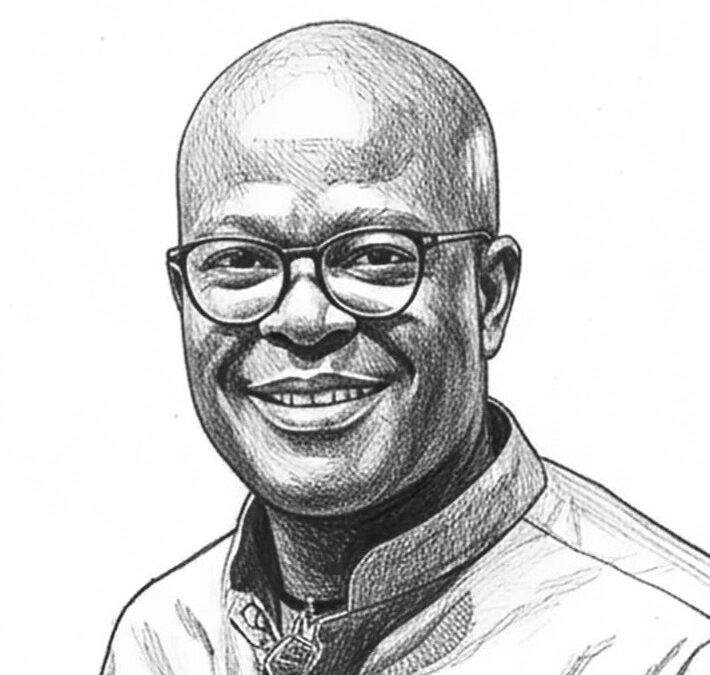
Dr. Andy (Kwaku) Kusi-Appiah
The power of water:
Water is life. But in practice, water is also power!
Who has access to it, who controls it, and who is forced to struggle for it reveals the deeper structures shaping our society, globally and right here in Ottawa.
As Black people living within a settler colonial system, we understand what it means to navigate structures that were not built with us in mind. Indigenous communities across this land continue to face that reality in even more direct and enduring ways, particularly when it comes to water. When we look closely, water is not just an environmental issue, it is a justice issue.
My work examining water systems across Mzuzu (Malawi), Ottawa (Canada), and Indigenous communities in Canada reveal something important: while these places differ geographically, the underlying patterns of inequality are strikingly similar.
Water is never just water:
In Mzuzu (Malawi), water is labour. Women and young girls wake before sunrise, walking long distances to collect it. The physical toll is constant, and the consequences extend into education, health, and economic opportunity. Water shapes daily life in ways that are both visible and deeply embedded.
In Indigenous communities here in Canada, the issue is not distance, but safety. Long-term boil-water advisories mean that even basic acts like drinking, cooking, brushing teeth, require caution. In a country known globally for its freshwater abundance, this reality exposes something deeper than scarcity. It reveals systemic neglect.
Here in Ottawa, the issue presents differently, more subtle, but no less real. Working within community gardens, I have observed small streams drying up during critical growing periods. When this happens, the soil hardens, crop yields decline, and what once appeared stable becomes fragile. The experience of carrying water manually, even temporarily, shifts one’s understanding of water security. It becomes clear that access is not guaranteed.
These experiences are not isolated. They are connected through systems of governance, infrastructure, and power.
Environmental Challenges are human challenges:
Political ecology reminds us that environmental challenges are rarely just environmental. They are shaped by policy decisions, historical processes, and whose needs are prioritized. In many cases, water scarcity is not about physical absence, it is about unequal access.
As Wangari Maathai observed, “It’s the little things citizens do that will make the difference.” Across these communities, people are indeed doing those small but essential acts every day. Yet an important question remains: why are some communities left to rely primarily on resilience, while others benefit from stable and well-supported systems?
The answer lies in how power flows, much like water itself.
Across all three contexts, however, one constant emerges: people are not passive. They act.
In Mzuzu (Malawi), communities plant trees to protect water sources and sustain local ecosystems. In Indigenous communities, water stewardship is embedded within cultural practice, responsibility, and intergenerational knowledge. In Ottawa, community gardeners adapt through conservation practices such as mulching, water sharing, and seasonal adjustments.
This reflects a principle many of us recognize: Ubuntu; “I am because we are.” Water reinforces this reality. Human well-being is collective, not individual.
As Vandana Shiva reminds us, “In nature’s economy, the currency is not money, it is life.” The communities described here operate within that understanding. Water is not treated as a commodity, but as a shared foundation for survival, dignity, and continuity.
Why This Matters for Black Ottawa:
For Black communities in Ottawa, environmental conversations can sometimes feel distant, but they are not.
From urban farming to food access, from housing conditions to green space availability, environmental realities shape our daily lives. The same systems that marginalize us socially also influence how resources, including water, are distributed and maintained.
Water justice is part of racial justice.
At the same time, solidarity is essential. Indigenous struggles for water sovereignty are not separate from our own experiences of marginalization. They are interconnected, rooted in the same broader structures of exclusion under settler colonialism.
Water connects these struggles.
Where do we go from here?:
If we are serious about sustainability, we must also be serious about justice. Environmental solutions cannot be separated from social realities, nor can they ignore the histories that shape present conditions.
The lesson across Ottawa, Mzuzu, and Indigenous communities is clear: water is not just a resource. It is a relationship, a responsibility, and a reflection of who we value as a society. Water connects everything, ecology, health, culture, and power.
In essence, environmental issues are deeply embedded in our lived realities. They shape access to food, the sustainability of community spaces, housing conditions, and overall well-being. The same systems that marginalize Black communities socially also influence how environmental resources are distributed and maintained.
Water justice is therefore inseparable from racial justice.
Conclusion:
So, the question is not whether water is life.
The question is: whose lives are being sustained, and whose are being strained?
Because until water flows with justice, it does not truly flow for all.
Andy (Kwaku) Kusi-Appiah is a community leader, political ecologist, researcher, lecturer/educator based in Ottawa. A former president of the Ghana Association of Ottawa (Andy served as president for two terms), he is deeply committed to serving his community, mentoring young leaders and fostering dialogue among African and Caribbean diasporas in Canada. His work explores leadership, sustainability, and community renewal.
Well articulated
Informing and straight to the point