
Racial issues within law enforcement agencies
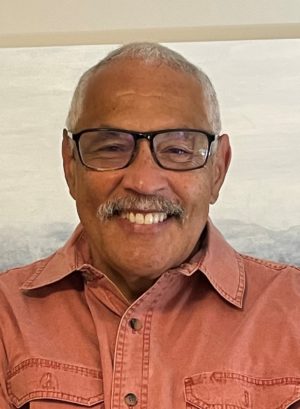
by Cal Lawrence
I have spent more than half a century standing at the uneasy intersection of policing and race, trying to make sense of a system that promises fairness while too often delivering something else.
When I listened to Hank Idsinga speak about “tyrannical behaviour” and the quiet consequences of being “too good at what you do,” it didn’t sound new. It sounded familiar, like an echo of patterns many of us have lived, documented, and spoken about for decades.
In my own journey, beginning in 1970, I believed change was not only possible but inevitable. I thought that if the issues were named clearly, if racism, exclusion, and bias were exposed to the light, they would lose their power.
But experience has a way of reshaping belief. Over time, I came to understand that systems do not yield easily, especially when those systems benefit from silence, hierarchy, and the quiet maintenance of the status quo.
What some call “anti-social behaviour” in policing is often misunderstood. It is not always loud or obvious. It can be subtle, procedural, hidden behind policy or masked as discretion.
It shows up in who is encouraged and who is overlooked, who is mentored and who is monitored, who is seen as leadership material and who is seen as a problem to manage. And when race enters the equation, these patterns can harden into something more entrenched—something that feels less like coincidence and more like design. More careers are made or broken in the drinking mess of police organizations than in proper police procedures.
I have seen how excellence can be reframed as threat.
When a Black officer performs at a high level, it can disrupt expectations that were never openly stated but quietly enforced.
That disruption is not always welcomed. Instead, it can trigger resistance—through isolation, through whispered doubt, through decisions made in rooms where the outcome is decided long before the meeting begins.
The back-room conversations, the unexplained transfers, the promotions that never quite materialize—these are not abstract ideas. They are lived realities for many.
There is also the matter of projection—the need some individuals have to externalize what they cannot reconcile within themselves. Contempt, when left unchecked, seeks expression.
It can surface in language, in tone, in the casual remark that reveals more than it intends. For those on the receiving end, it is not just offensive—it is cumulative. It wears down trust, erodes confidence, and creates an environment where one is constantly navigating both the job and the unspoken hostility surrounding it.
In reflecting on Black Cop: My 36 Years in Police Work, I recognize that my story is not unique. It is part of a broader pattern that stretches beyond any one department, any one city, any one country. The idea that progress is always forward-moving is comforting, but not always accurate.
There are moments when equality is perceived not as a shared gain but as a loss of control. In those moments, progress can be resisted, delayed, or quietly undone.
Growing up in Halifax, I saw racial conflict early enough to believe that intervention mattered. That belief carried me into a lifetime of work, advocacy, dialogue, effort. And to be clear, there were moments of impact. Individuals changed. Perspectives shifted. Lives were influenced in ways that mattered deeply on a personal level.
But collective change, the kind that reshapes institutions—proved far more elusive.
That realization is not easy to sit with. To set out to change a system and instead feel that the system has, in some ways, changed you, that is a difficult truth. It forces a reckoning with hope itself. Not the kind of hope that assumes outcomes, but the kind that persists without guarantees.
I do not claim that racial conflict in policing will resolve neatly, or even soon. History does not offer that assurance. What it does offer is evidence that awareness, resistance, and persistence have value, even when outcomes are incomplete. If there is a lesson in all these years, it may be this: change is not always measured in systems transformed, but in voices that refuse to be silenced and truths that refuse to be buried.
I speak not as an observer, but as a participant, someone who has seen the cycles, felt the resistance, and continued anyway. If that makes me a messenger of uncomfortable truths, then so be it. The message is not meant to discourage, but to ground the conversation in reality. Only from that place can anything lasting begin to take shape.
Hank Idsinga expressed the religious abuse as a Jew. However he could have been a black person, or a woman, who was abused just because of gender, race, religion, jealousy, or envy speaking those same words.
It was that way when we were born and it will be that way when we die. Adjust yourselves accordingly.
—Calvin Lawrence
Social Justice Advocate
Calvin Lawrence retired in 2006 from the Royal Canadian Mounted Police (RCMP) after twenty-eight years, and eight and half years with Halifax City Police. He was recognized as one of Nova Scotia’s outstanding citizens in Steve Kimber’s book: “More Than Just Folks”, 1998. He is currently a consultant on police-related subjects. He is the author of “Black Cop”.