
“The Salt We Do not see: Absence, Relational Ecology, and Environmental Inequality in Ottawa.”
by Andy (Kwaku) Kusi-Appiah.
——
“Silence is a weapon preferred by the oppressor to hide their atrocities. The
oppressor will use your own kith & kin to ensure that your silence is guaranteed.”
#Kusi-Appiah, A.
—–
The salt we do not see:
“If what you offer is not enough, offer your absence. Salt is not written on the menu, but its absence is felt.”
(Yildiz Kenter, 2003)
Salt is unnoticed when it is present; it is only noticed when it is absent. That is how absence works. Absence does not announce itself but accumulates quietly until life loses coherence. We notice bees only when food systems weaken; wetlands only when basements flood; trees only when heat intensifies; and rivers only when they overflow. Absence is not loud; it is incremental. It becomes visible only after harm is underway.
Absence as relational breakdown:
African philosophy has long understood what modern policy often forgets; that life is relational. Bénézet Bujo reminds us that personhood is formed through relationships, not isolation (Bujo, 2009). Ubuntu (I am because we are) expresses this sentiment quite well.But this ‘we’ includes land, water, soil, and the ecological systems that sustain life itself. When rivers are damaged, communities are damaged. When soil is exhausted, future generations inherit depletion. When extraction replaces reciprocity, absence enters the circle of life.
Wangari Maathai translated this into action through the Green Belt Movement, where Kenyan women planted more than 51 million trees. Tree planting, for Wangari Maathai, was not just symbolic, it was political resistance against ecological destruction and exclusion (Maathai, 2006). Similarly, W.E.B. Du Bois saw this relational inequality in his book “The Souls of Black Folk.” (1903). The ‘colour line’ was also environmental, shaping access to land, health, and infrastructure. Today the ‘colour line’ appears in heat maps, OC Transpo transit access or lack of it, food insecurity, and tree canopy distribution.
Olaudah Equiano’s 1789 narrative also reminds us that before colonial disruption, land was embedded in governance, culture, and livelihood. Colonialism fractured these systems, extracting people and ecological autonomy at once. Furthermore Nnimmo Bassey name today’s continuation of this logic as carbon colonialism, where those least responsible for climate change, such as Black people and other marginalized community members, suffer its greatest impacts (Bassey, 2011). The economic geographer and political economist, David Harvey, show how capitalism extracts surplus value from labour while shifting ecological costs elsewhere, to the marginalized; to the oppressed; to the coerced, and to the ‘other’ (Harvey, 2018). Finally, and most importantly, Cedric Robinson reminds us that this system is structured through racial capitalism, not separate from it (Robinson, 2000).
Ottawa: a city of uneven absence:
Absence is not accidental; it is socially engineered and manufactured to the detriment of the maligned and oppressed citizens. In Ottawa, absence is lived, and it is not abstract. Take Heron Gate neighbourhood for example, changes in food infrastructure have reduced proximity to fresh produce. What seems like a commercial shift has become a health trajectory shaped by distance, access, and cost. Similarly, intense storms expose infrastructural fragility in the Overbrook neighbourhood. Needless to say, flooded basements are not only weather events; they are the outcome of long-term environmental design choices, including reduced natural water absorption. In the Vanier and Lowertown neighbourhood of Ottawa, heat exposure intensifies where tree canopy is thin and housing is less able to buffer climate extremes. This is because trees function as infrastructure, and their absence is measured in abnormally high temperatures, mental health stress, and physical health risk. These are not separate issues, they are interconnected expressions of uneven urban design.
Absence is also deeply political; it appears when communities are consulted after decisions are made. Absence appears when participation is replaced by notification. Absence appears when people are asked to adapt to conditions they did not design. Deferred presence is simply absence in another form.
Lived experience and positionality:
As a member of Ottawa’s Black community, I do not encounter absence as abstraction. I encounter absence in conversations with elders who remember neighbourhoods before redevelopment altered them. I encounter absence in community meetings where residents describe being consulted after decisions are finalized. I encounter absence in discussions with newcomers navigating housing, transit, and environmental vulnerability while building new lives.
Gratitude for opportunity does not require silence. Both can exist at once; it is not a zero-sum game. My understanding of land also comes from West Africa, where land is not simply property. It is relationship, memory, and responsibility. A river is not only water; it is life in motion. That understanding makes urban inequality more visible. What appears technical is often relational. What appears neutral is often structured.
From absence to presence:
Despite inequality, presence exists. Presence is community gardens. Presence is mutual aid. Presence is neighbours checking on elders during heatwaves. Presence is youth planting trees in under-canopied areas. Presence is youth tending pumpkin farms in the greenbelt. Presence is families building food systems where formal ones fail. Presence is not symbolic. It is infrastructural.
As Leonard Cohen once wrote:
“There is a crack in everything. That is how the light gets in.”
(Cohen, 1992).
The crack is where people organize.
The crack is where silence breaks.
The crack is where absence is unveiled.
The crack is where communities refuse disappearance.
The crack is where we become centered.
Conclusion: presence as justice:
African and Afro-diasporic thought converge on one insight, and it is that ecological harm is relational harm. Bujo shows that relationships form personhood; Maathai shows that restoration is political; Du Bois shows that inequality is spatial; Equiano shows that extraction has a history; Bassey shows that climate injustice is global. Most importantly, Harvey and Robinson show that economic systems structure environmental harm. So, together, these scholars reveal that absence is not accidental, it is produced and multiplied by ‘empire’ for the benefit of the oppressor and his surrogates. Ottawa’s challenge is therefore not only technical, but ethical. We do not only need climate solutions. We need relational repair. We need systems where communities shape decisions, not merely respond to them. We need infrastructure that reflects ecological reality. We need justice that distributes environmental benefits as fairly as environmental burden.
We need presence.
Because absence, like salt, is only noticed when it is gone. And by then, it is already shaping life.
The Earth does not respond to promises. It responds to action. So let us choose presence.
Salt in the pot.
Hands in the soil.
Voices in the room.
Seeds in the ground.
And where silence seeks to dominate, let us become the crack through which the light enters (apologies to Leonard Cohen)
Works Cited
Bassey, N. (2011). To cook a continent: Destructive extraction and the climate crisis in Africa. Pambazuka Press.
Bujo, B. (2009). Foundations of an African ethic: Beyond the universal claims of Western morality. Palgrave Macmillan.
Cohen, L. (1992). Anthem. On The Future. Columbia Records.
Du Bois, W. E. B. (1903). The souls of Black folk. A. C. McClurg & Co.
Equiano, O. (1789). The interesting narrative of the life of Olaudah Equiano. Printed for and sold by the author.
Harvey, D. (2018). The limits to capital (2nd ed.). Verso.
Kenter, Y. (2003). There Was Always Love. Türkiye İş Bankası Kültür Yayınları.
Maathai, W. (2006). Unbowed: A memoir. Alfred A. Knopf.
Robinson, C. J. (2000). Black Marxism: The making of the Black radical tradition. University of North Carolina Press.
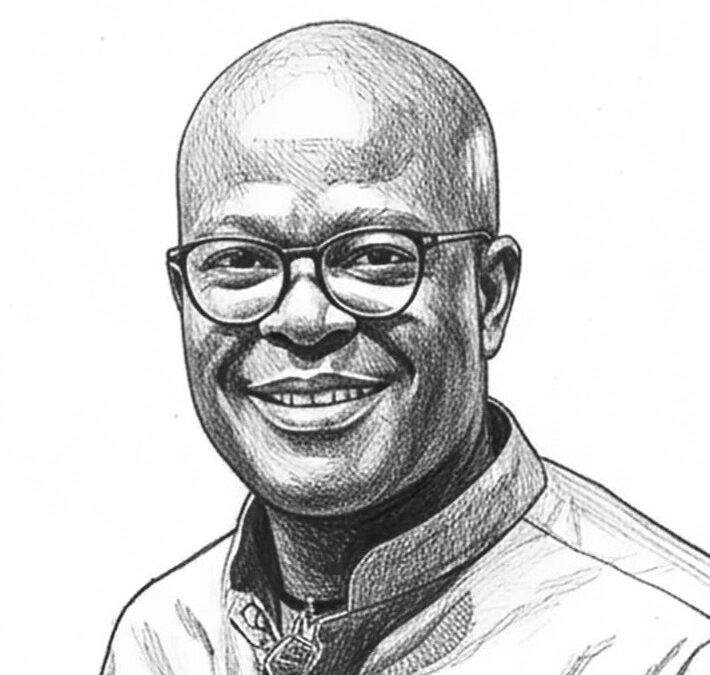
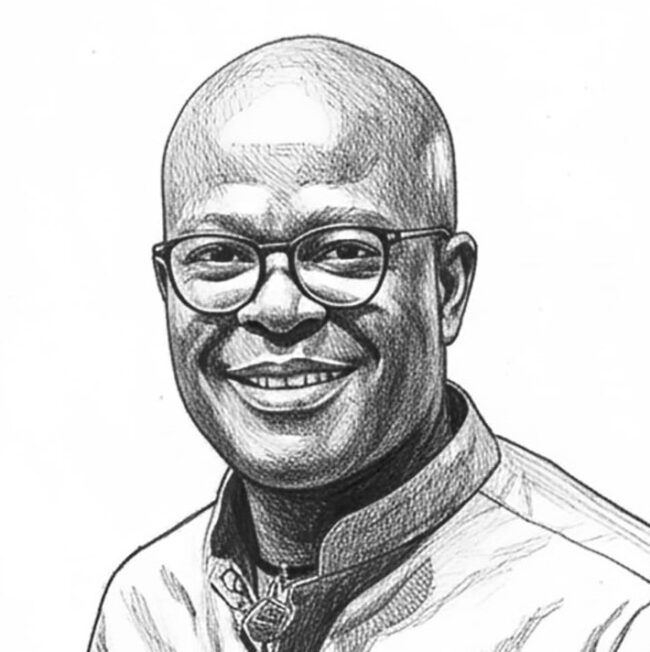
Andy (Kwaku) Kusi-Appiah is a community leader, political ecologist, researcher, lecturer/educator based in Ottawa. A former president of the Ghana Association of Ottawa (Andy served as president for two terms), he is deeply committed to serving his community, mentoring young leaders and fostering dialogue among African and Caribbean diasporas in Canada. His work explores leadership, sustainability, and community renewal.