
The Case for Police Officers in Schools
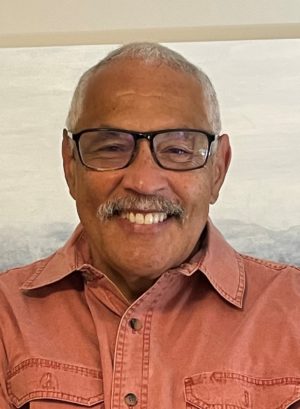
by Calvin Lawrence
The debate over police officers in schools has become increasingly polarized. For some, the presence of a police officer in a school symbolizes safety and protection. For others, it represents authority, mistrust, and the failures of policing institutions. Lost in much of this debate is a simple but important truth: people should be judged as individuals, not as stereotypes.
There is no question that public confidence in policing has declined in many communities. High-profile incidents involving police misconduct have damaged trust and generated legitimate concerns about accountability. Some police organizations have failed to meet the standards expected by the public they serve.
However, it is important to remember that organizations are made up of individuals. The actions of some should not automatically define all.
Most of us reject the idea of collective guilt in other professions.
If a doctor commits malpractice, we do not conclude that all doctors are incompetent.
If a lawyer acts unethically, we do not assume every lawyer is dishonest.
If a teacher abuses their position, we do not condemn the entire teaching profession.
We recognize that individuals can fail while others in the same profession continue to serve honorably.
Why should police officers be treated differently?
The key question should not be whether police officers belong in schools. The question should be whether the right police officers belong in schools.
A carefully selected School Resource Officer can be an enormous asset to students, teachers, parents, and the community.
The most obvious benefit is safety.
While school shootings remain relatively rare, they are devastating when they occur. In an emergency, seconds matter. A trained police officer already on site can respond immediately rather than waiting for officers to arrive from elsewhere. The officer’s presence may deter violence, but more importantly, it provides an immediate response capability when lives are at risk.
Critics often argue that schools should not feel like police stations. That concern is understandable. However, the purpose of a School Resource Officer is not to turn schools into law enforcement zones. It is to provide security while also building relationships.
In fact, one of the greatest benefits of a School Resource Officer has little to do with crime.
It is education.
Many students grow up with limited understanding of how the justice system works. Television, movies, social media, and online commentary often create distorted views of policing and the law. A police officer in a school can help students understand the difference between justice as an ideal and justice according to law.
The two are not always the same.
Students frequently ask why a person who appears guilty is acquitted, or why an individual receives what seems like a lenient sentence. These are opportunities to explain concepts such as due process, the presumption of innocence, constitutional rights, evidentiary standards, and judicial discretion.
These discussions can help students become informed citizens who better understand both their rights and their responsibilities.
A School Resource Officer can also humanize policing.
Many young people form opinions about police based on news reports or social media videos that often show officers at their worst moments. Rarely do they see officers helping victims, calming family disputes, locating missing persons, assisting individuals experiencing mental health crises, or performing countless other duties that never make headlines.
When students interact daily with an officer in a non-enforcement setting, they see a human being rather than a uniform. They see someone with a family, challenges, interests, and experiences. They have the opportunity to ask questions directly rather than relying on assumptions.
Likewise, the officer gains a better understanding of young people.
Police officers typically encounter citizens during stressful situations: traffic stops, criminal investigations, domestic disputes, or emergencies. These interactions rarely allow officers to see people at their best.
Schools create a different environment.
There, officers can interact with students as mentors, coaches, guest speakers, and role models. They learn how young people think, what concerns them, and how to communicate more effectively with future generations. These relationships can improve policing far beyond the school walls.
School Resource Officers can also help students who may be struggling.
A student dealing with bullying, family problems, gang pressure, substance abuse, or mental health challenges may feel more comfortable speaking with a trusted officer than with other authority figures. In many cases, an officer can connect students with appropriate resources before problems escalate into crises.
Critics worry that police presence may criminalize student behavior. This concern deserves attention. The answer, however, is not necessarily removing officers altogether. The answer is ensuring that officers assigned to schools receive specialized training and understand their role.
The ideal School Resource Officer is not a disciplinarian for routine school matters. They are a protector, educator, mentor, and community partner.
Selection matters.
Not every police officer is suited for school duty. The role requires patience, communication skills, emotional intelligence, and a genuine interest in helping young people. Departments should choose officers carefully and provide ongoing training.
The debate also raises a broader philosophical issue.
If we condemn all police officers because of the misconduct of some, consistency requires us to apply the same logic elsewhere. Yet few people are willing to do that.
When a doctor violates their oath, we do not conclude that all doctors violate their oath.
When a lawyer acts unethically, we do not conclude that all lawyers are unethical.
When a teacher abuses their authority, we do not conclude that all teachers abuse their authority.
When a politician engages in corruption, we do not conclude that all politicians are corrupt.
Most people understand that individuals are responsible for their own conduct.
Police officers deserve the same standard of fairness.
Holding individuals accountable for misconduct is essential. Demanding reform where needed is appropriate. Criticizing policies is healthy in a democratic society.
But judging every police officer by the actions of a few is neither fair nor productive.
A well-chosen School Resource Officer can provide safety, education, mentorship, and understanding. At a time when divisions between police and communities often seem to be growing, schools may be one of the best places to build mutual respect and trust.
The goal should not be to keep police and young people apart.
The goal should be to ensure that they get to know one another as human beings.
That may be one of the most important lessons a school can teach.
Calvin Lawrence retired in 2006 from the Royal Canadian Mounted Police (RCMP) after twenty-eight years, and eight and half years with Halifax City Police. He was recognized as one of Nova Scotia’s outstanding citizens in Steve Kimber’s book: “More Than Just Folks”, 1998. He is currently a consultant on police-related subjects. He is the author of “Black Cop”.