
Thursday 18 June 2026
University of Ottawa hosts 4th annual Sickle Cell Day conference
by Asantewa Nkuah, Local Journalism Initiative Reporter
The Interdisciplinary Centre for Black Health held the 4th edition of their Sickle Cell Day conference at the University of Ottawa Faculty of Health Sciences on Thursday June 18. The theme for this year was “Closing the Survival Gap: Equity in Sickle Cell Disease.” Sickle cell disease is a group of inherited disorders that affect how blood carries oxygen.
Opening remarks included a powerful testimony by Ade Ekhator, a remarkable young woman who was diagnosed at just 13 months with Sickle cell SS, the most severe form of the disease. She experienced chronic pain and hospitalization until the age of 7, missing school often.
Ade credited the improvement of her health to her faith and having strong support systems in place. She became the first Black valedictorian at Brookfield Collegiate Institute, earning a Nursing degree from uOttawa, and is now headed to medical school.
While incredible, Ade emphasized that her experience is not the norm. Sickle cell disease (SCD) disproportionately affects BIPOC and is an issue that deserves greater attention.
Dr. Wanda Whitten-Shurney, CEO and Medical Director of the Sickle Cell Disease Association of America – Michigan Chapter (SCDAA-MI) drove all the way from the United States to deliver a keynote presentation, Sickle Cell 101.
She was an approachable and charismatic speaker who got the audience “up close and personal” with the disease, educating through medical facts, history, and information about the social impacts of SCD. More of Dr. Wanda’s work can be viewed here: https://youtu.be/rmnnWRuYMtc?si=skgwsDJq2udNLY5V.
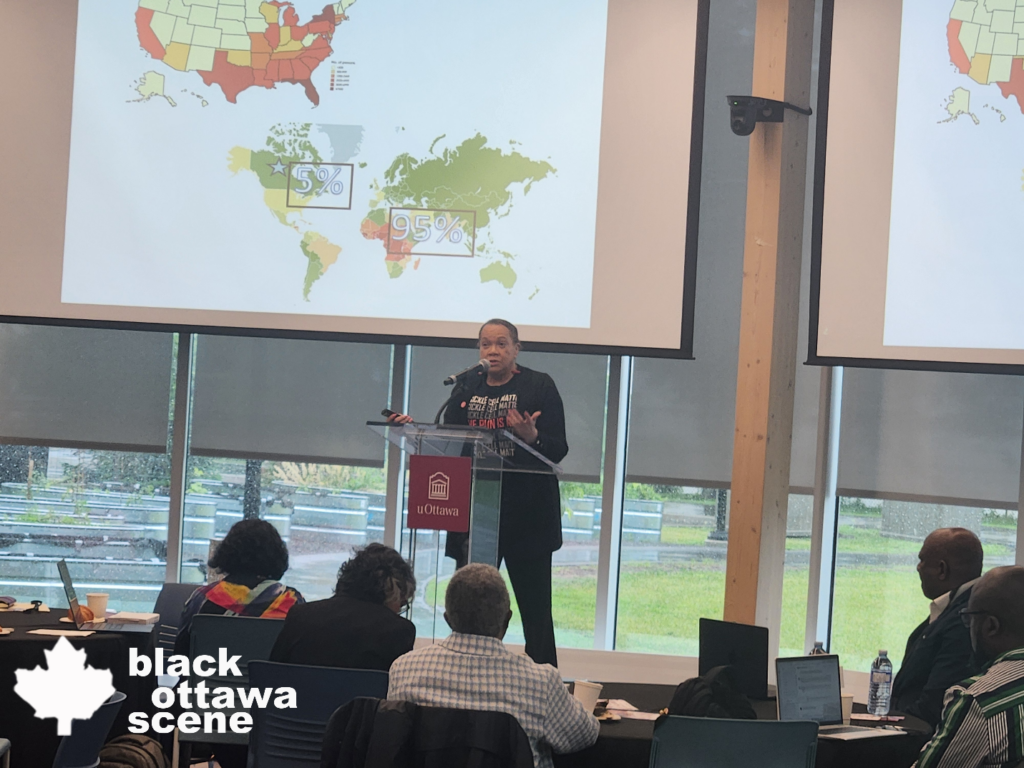
Dr. Wanda Whitten-Shurney presents “Sickle Cell 101.”
The conference was a highly enriching event with three informative sessions. Senator Tony Ince joined Biba Tinga, President of the Sickle Cell Disease Association of Canada (SCDAC) to discuss Bill S-201, an act that would introduce a national framework on sickle cell disease in Canada, offering greater support to those affected by the disease.
Biba’s reason for supporting the bill is simple: “We need more.” Her son has sickle cell disease and it is not currently recognized as a disability despite the impact it has on both their lives. Senator Ince emphasized that a framework of care is needed because we cannot put everything on healthcare workers. Change does not happen in isolation. It builds on the momentum of those who have come before. Information about Bill S-201 can be found here: https://www.parl.ca/LegisInfo/en/bill/45-1/S-201.
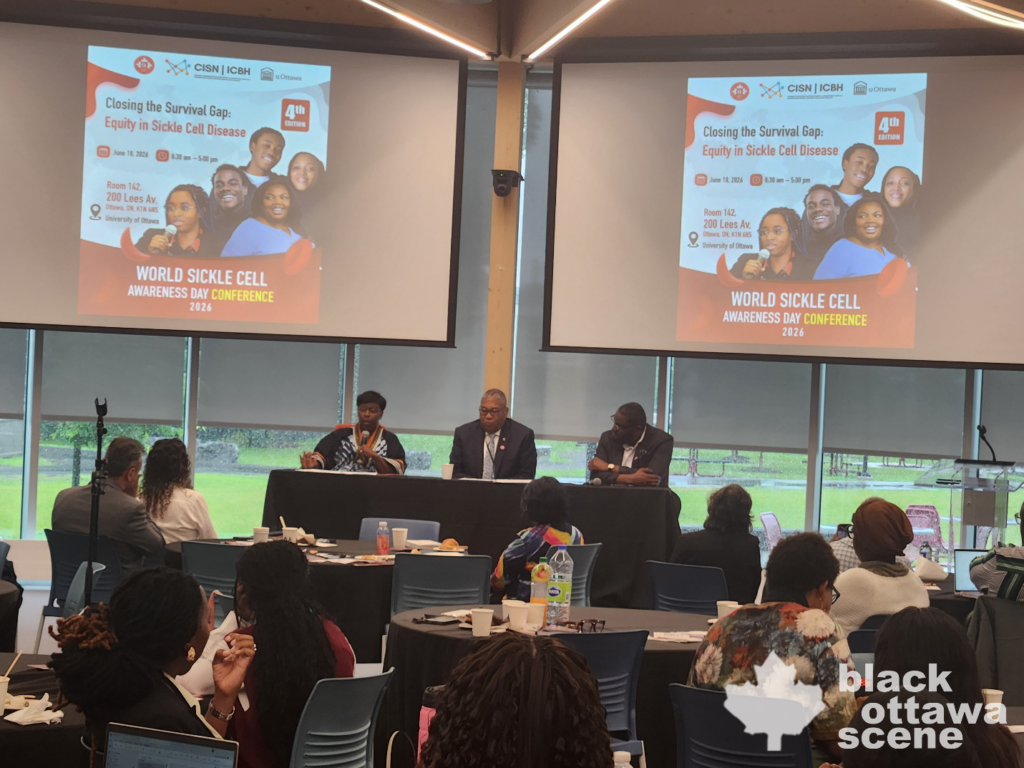
Biba Tinga and Honorable Senator Ince discuss the importance of Bill S-201, moderated by Dr. Jude-Mary Cénat.
Personal testimony from both Sickle Cell Warriors and Caregivers was shared. Biba also introduced The Warrior Voices Project, an upcoming book from the SCDAC that will bring together different stories. Email Biba at [email protected] if you are interested in learning more.
Dr. Sarah Tehseen, Dr. Ziad Solh, and a team led by Dr. Dzifa Dordunoo shared the work they are doing to address gaps in SCD care, emphasizing good news stories and medical progress being made. Emmanuelle Bernheim shared her research on issues related to malaria eligibility restrictions in Canada. The report can be accessed here: https://www.uottawa.ca/research-innovation/sites/g/files/bhrskd326/files/2025-06/Discrimination-issues-malaria-eligibility-restrictions-Canada_0.pdf.
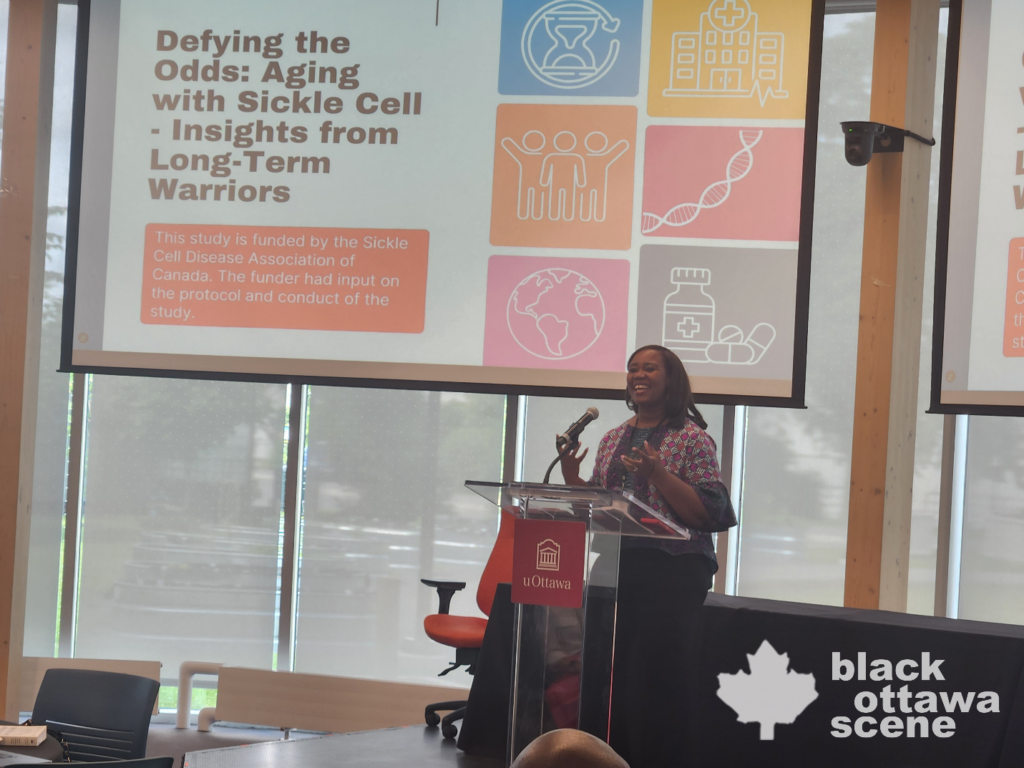
Dr. Dzifa Dordunoo, PhD presents her ongoing research project on the experiences of people living with sickle cell.
My favourite presentation was the Lived Experience panel that brought together Kobby Gates, a Warrior from Ghana, Judy Grandison, Caregiver to her son, and Marie José Lucien, a Warrior representing the older population.
As someone who also lives with chronic illness, their stories resonated deeply with me. Kobby shared many instances of battling for recognition. He strongly hopes that Bill S-201 will be passed, allowing for accommodation and better care. Judy also has high hopes for the bill. The path that she sees before her son scares her. She is tired of facing constant dismissal as she advocates for him.
I felt Marie José’s wisdom as she spoke. She emphasized self-advocacy: “You have to know your body. You have to say to your doctor what you feel.” And you need support. When you are ill, the people who love you will stay with you.
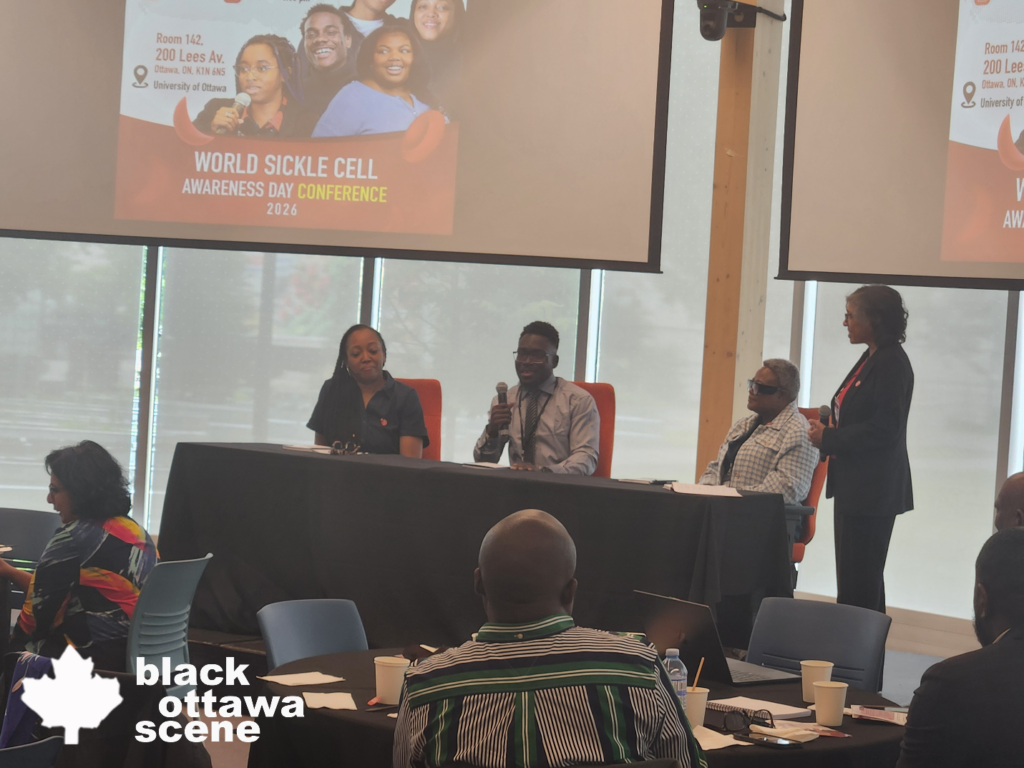
Lived Experience panel with Kobby Gates, Judy Grandison, and Marie José Lucien. Moderated by Dr. Smita Pakhale.
After the conference I spoke with Dr. Jude-Mary Cénat, Director of the Interdisciplinary Centre for Black Health and the V-TRaC Lab to find out how this all began. You cannot launch a centre for Black Health without addressing SDC, Dr. Cénat explained. What began as an afternoon has now become a full-scale conference. He has seen real changes and growth over the years.
The main goal of the conference was to have the community share what is being done in terms of research, practice, and study. I asked him what are some actions that we can take to support sickle cell disease awareness and advocacy. “Train ourselves and train others. Come and commit. Add your voice. Be vocal. Support people mentally and socially. Support the fight.”
Biba Tinga wants people to reframe how they think about sickle cell disease. “It is not only pain. It is chronic, progress, and genetic. SCD is an underserved cause, and we need awareness at every level.” If you wish to help, there is work to be done, no matter what your expertise is. Learn about the current standards of care and help. Apply an equity lens.
Ultimately, I feel incredibly fortunate to have attended this conference. Bringing together Sickle Cell Warriors, caretakers, researchers, medical workers, and legislators truly allowed participants to see SCD from all sides. By learning how sickle cell disease changes lives and requires stronger social and medical support, I have now joined the tapestry of those advocating for SCD.
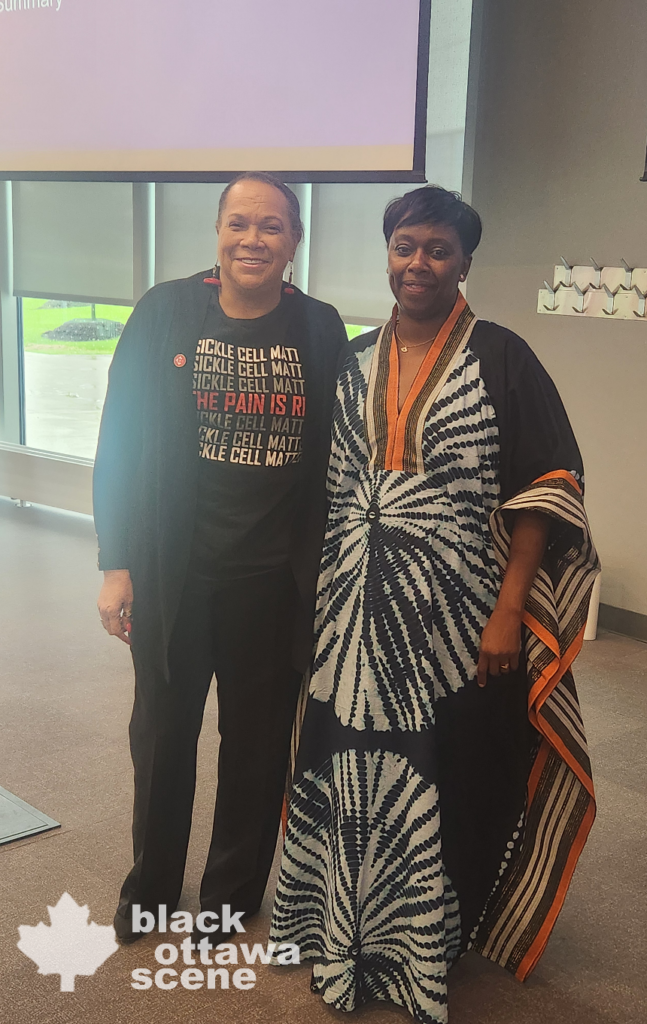
Dr. Wanda Whitten-Shurney (SCDAA-MI) and Biba Tinga (SCDAC) pose together.
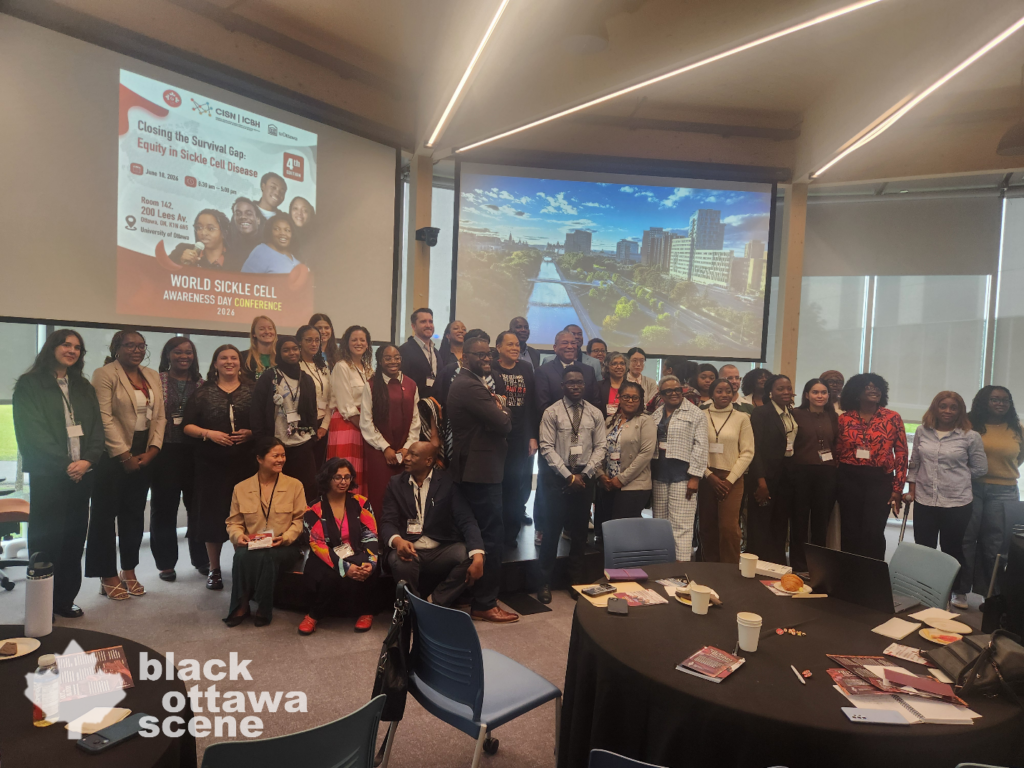
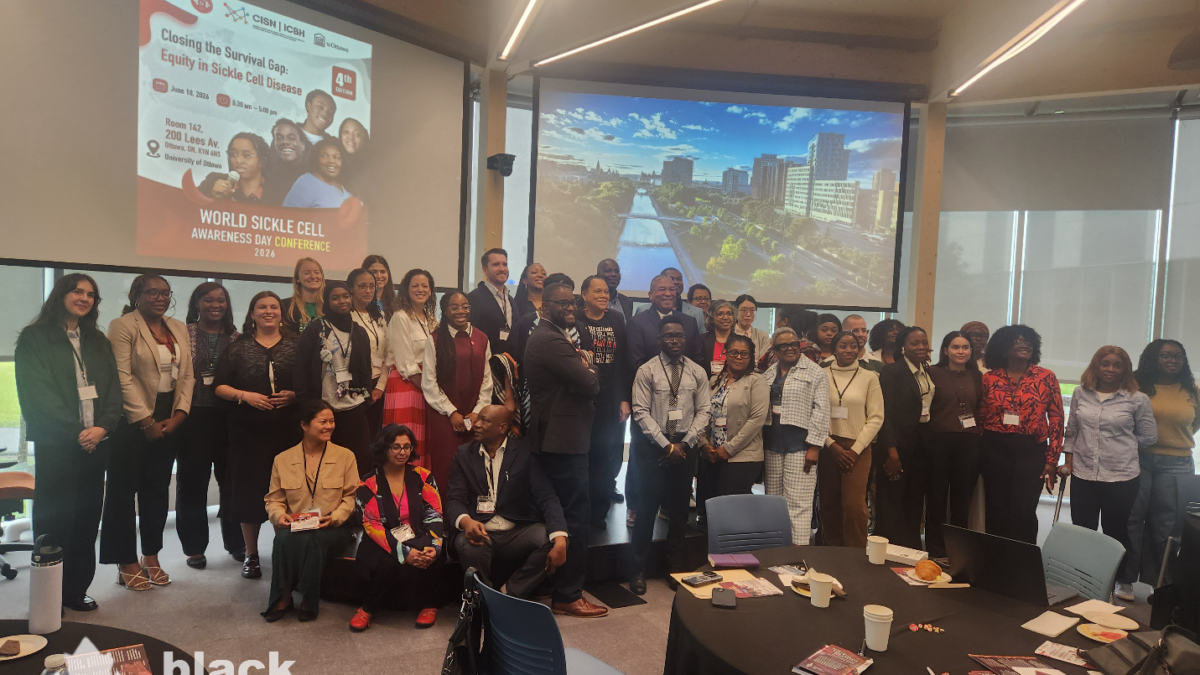
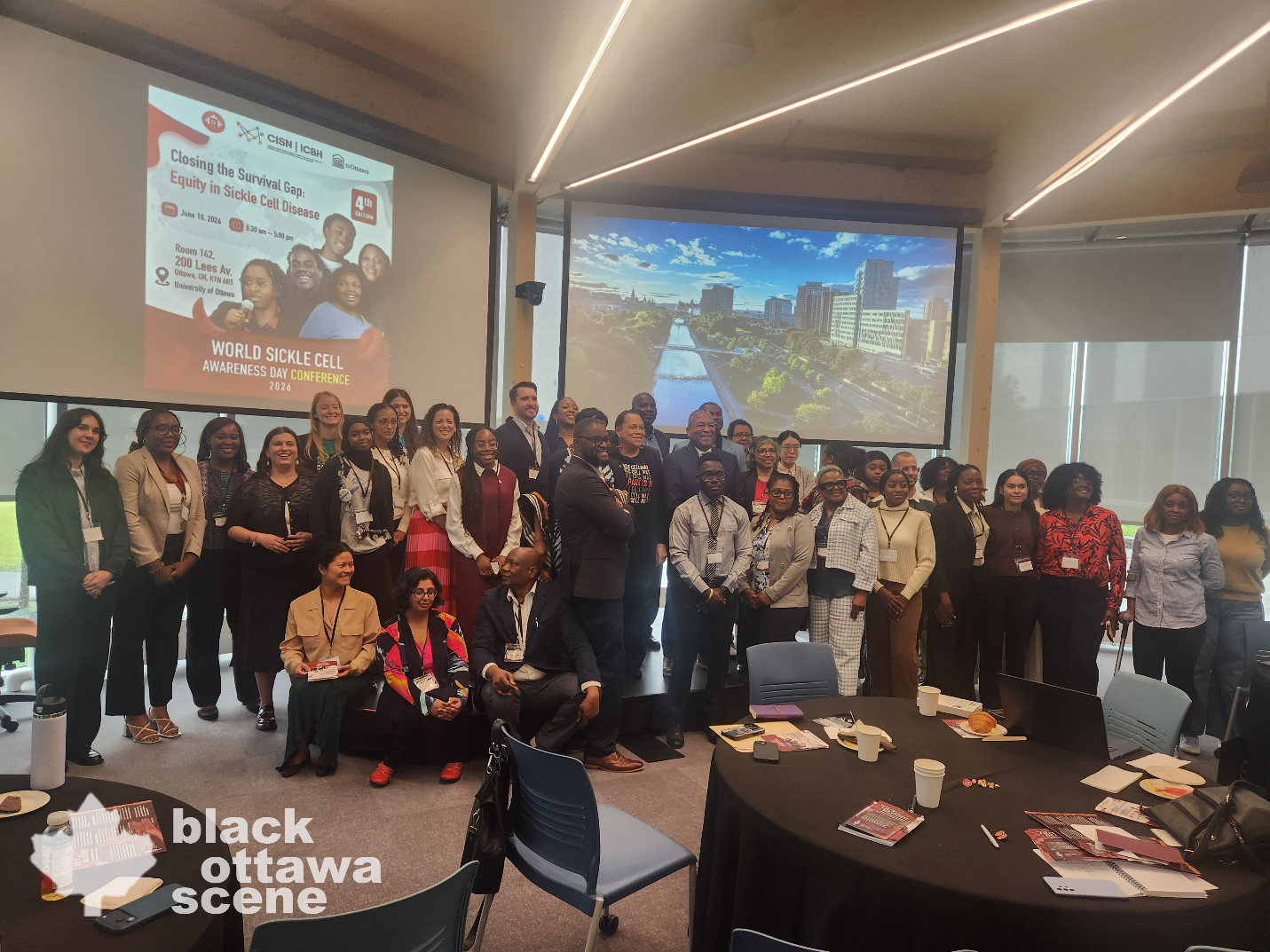
Conference attendees gather to take a photo with Dr. Wanda and Senator Ince.