
“When Water Becomes a Relationship: What Maple Hill Urban Farm (MHUF) Can Teach Us About Environmental Stewardship.”
By
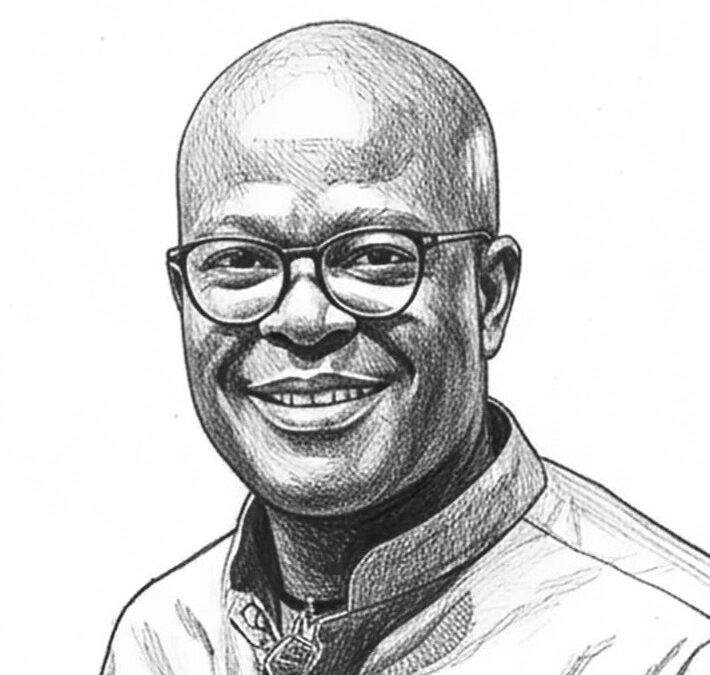
Andy Kusi-Appiah, PhD.
—
“Everything is connected to everything else. Everything must go somewhere.”
#Barry Commoner.
—
Introduction:
There is something remarkable about watching a gardener water a 10 x 40ft plot. The water is not simply turned on and forgotten; it is carried, shared, measured, and often, saved. A gardener watches the leaves, feels the soil, and decides which plants need water most. Rainwater is collected, leaves become mulch, cardboard becomes compost, and kitchen scraps return to the soil. At MHUF on Moodie Drive in Ottawa’s Greenbelt, environmental stewardship is not something that exists only in policy documents or climate conferences. It is something people practice every day. And water is at the centre of it.
MHUF is a 167-acre working farm managed by Mr. Don Trott, a professional agricultural economist. Alongside pasture-raised animals and market gardens are more than 100 allotment plots cultivated by people from different backgrounds and walks of life. Since 2024, the farm has also hosted a collaborative allotment project with Bells Corners Community Garden, producing fresh food for donation to families experiencing food insecurity through the FAMSAC Food Cupboard (Humphreys, 2024). But there is another story growing between the rows of vegetables, and that story is that water here is never infinite.
When Water Is Not Infinite:
My research at MHUF began with a simple question: What happens to environmental stewardship when water is not always readily available? Allotment gardeners do not have the individualized water infrastructure that many urban residents take for granted. Water is shared, seasonal and accessed through communal standpipes and rain barrels. In practical terms, gardeners must work around the availability of water. That inconvenience, however, has produced something unexpected. It has produced knowledge.
Gardeners learn to recognize when a plant is thirsty. They learn when to water and when not to. They learn how mulch can hold moisture in the soil and how rainwater can be captured rather than allowed to run away. Urban political ecology reminds us that water is never simply a physical substance moving through pipes and landscapes. Water flows are also shaped by social relations, power, and unequal access (Swyngedouw, 2004). At MHUF, gardeners experience this reality in very practical ways. In an apartment, water can feel limitless, but on an allotment, it becomes a relationship.
From Taking to Giving Back:
This is where MHUF offers a larger environmental lesson. The gardeners I interviewed did not describe stewardship as a grand environmental philosophy. They described it through what they actually do. One gardener, Olusegun, originally from Nigeria, spoke of not simply taking from the soil but exchanging with it: giving kitchen scraps and receiving tomatoes in return. Ibrahim, originally from Algeria, also described using mulch to keep water in the soil longer. The objective was not simply to obtain more water, but to make better use of what was already available. This is environmental stewardship as reciprocity.
It challenges the familiar idea that sustainability is only about consuming less or making better individual choices. At MHUF, sustainability is embedded in relationships: between gardener and soil, gardener and water, gardener and plant, and gardener and neighbour. Research on community and allotment gardens similarly demonstrates that these spaces can generate social and environmental benefits while creating opportunities for people to develop relationships with land and community (Bailey & Kingsley, 2022).
Nothing Should Be Wasted:
The most striking principle emerging from the research is what I call returnability. One allotment gardener, Mama Vitumbiko (originally from lalawi), explained why she avoids black landscaping fabric. It lasts, she argued, for too long. Instead, she prefers cardboard because it eventually breaks down and becomes part of the soil. Aminatu’s philosophy is simple: everything should have a “good death.” That idea captures something profound about ecological thinking. A cardboard sheet does not disappear. It changes form and leaves become soil. Kitchen scraps become nutrients, and water moves from rain barrel to soil to plant and eventually back into the wider hydrological cycle. Nothing is truly isolated.
This is what I call the organic universe: the understanding that everything is connected through cycles of giving, receiving, transforming, and returning. It resonates with Barry Commoner’s ecological insight that nature does not produce waste in the way modern industrial systems do: things move, transform, and become part of something else (Commoner, 1971). Urban agriculture can therefore be understood not merely as food production but as an attempt to reconnect ecological, social, and material cycles disrupted by urban life (McClintock, 2010).
The Garden as a Teacher:
There is another lesson here, particularly important in a city increasingly concerned about climate change, food insecurity, and environmental inequality. Sometimes scarcity teaches us more than abundance. Because water at MHUF is shared and limited, gardeners develop an ecological literacy that is deeply practical. They become attentive to weather, soil, plants, and the behaviour of water. The garden therefore becomes more than a place to grow food. It becomes a classroom, a laboratory in which people learn how urban systems work, and how those systems can be reimagined. This is close to what Loftus (2012) describes as everyday environmentalism: environmental politics emerging through the ordinary practices of people navigating the material conditions of everyday life.
A Multicultural Garden:
MHUF is also a remarkable meeting place for Ottawa’s diverse communities. Its allotment gardens bring together gardeners from across the city’s immigrant and diasporic communities, including Syrian, Zimbabwean, Ukrainian, Portuguese, Irish, Congolese, and Tanzanian communities. The result is more than a collection of individual gardens. It is a living cultural landscape where seeds, foods, languages, gardening knowledge, and traditions move across communities.
That diversity was particularly visible on August 29, 2026, when Her Excellency Professor Dr. Dora Francisca Edu-Buandoh, Ghana’s High Commissioner to Canada, accompanied by Gen. (Rtd.) Thomas Oppong-Peprah, Deputy High Commissioner and former Chief of the Defense Staff of the Ghana Armed Forces, and members of the Ghana High Commission staff, visited MHUF to familiarize themselves with the farm’s operations and its community of allotment gardeners.
The visit was significant not simply because Ghanaian Canadians are among the many communities represented at MHUF, but because it highlighted the farm’s wider role as a place where migration, food, culture, land, and environmental stewardship intersect. Kudos to Mr. Don Trott, who has masterfully created a welcoming environment for all.
What Maple Hill Can Teach Ottawa:
My research suggests that environmental stewardship does not necessarily begin with having more resources. Sometimes it emerges from learning how to live responsibly with what we have. The gardeners of MHUF have turned water insecurity into ecological knowledge, shared infrastructure into cooperation, and waste into a resource. As Ottawa confronts climate change, stormwater pressures, food insecurity, and growing debates about access to green space, we should pay greater attention to places where ordinary people are already practicing alternative forms of environmental stewardship.
The lesson from MHUF is quite simple: When water is treated as a commodity, we measure what we consume. When water becomes a relationship, we begin to ask what we owe in return. A 10x40ft allotment plot may seem small against the scale of a city, but sometimes, big environmental ideas begin in small places. And sometimes, the most important lesson is simply learning to return what we have been given!
Works Cited:
Bailey, A., & Kingsley, J. (2022). Valuing the benefits and enhancing access: Community and allotment gardens in urban Melbourne, Australia. Land, 11(1), 62. https://doi.org/10.3390/land11010062
Commoner, B. (1971). The closing circle: Nature, man, and technology. Alfred A. Knopf.
Loftus, A. (2012). Everyday environmentalism: Creating an urban political ecology. University of Minnesota Press.
McClintock, N. (2010). Why farm the city? Theorizing urban agriculture through a lens of metabolic rift. Cambridge Journal of Regions, Economy and Society, 3(2), 191–207. https://doi.org/10.1093/cjres/rsq005
Swyngedouw, E. (2004). Social power and the urbanization of water: Flows of power. Oxford University Press.
Andy (Kwaku) Kusi-Appiah is a community leader, political ecologist, researcher, lecturer/educator based in Ottawa. A former president of the Ghana Association of Ottawa (Andy served as president for two terms), he is deeply committed to serving his community, mentoring young leaders and fostering dialogue among African and Caribbean diasporas in Canada. His work explores leadership, sustainability, and community renewal.