
The Plan to Build Canada Strong
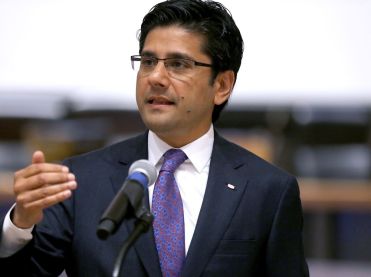
by Yasir Naqvi, M.P.
I hope you have enjoyed a beautiful start to the fall season and a Happy Thanksgiving with friends and loved ones.
Since Parliament returned in September, parliamentarians have been working hard to advance practical legislation that will improve quality of life in Ottawa Centre and across the country.
We know Canada is facing complex challenges in an increasingly uncertain world. In response, the federal government is charting a path forward by focusing on what it can control. Our plan is to build Canada strong at home and diversify our economic relationships abroad.
Build at Home
The government has introduced Bill C-39, The Building Canada Strong Act, which provides a framework for Canada to build major infrastructure more effectively, strengthen its transportation and trade networks, and ensure that new economic growth creates good-paying jobs. At the same time, the proposed framework will uphold rigorous environmental standards, respect Indigenous rights, and protect workers. These principles can and must go hand in hand.
To attract investment, Bill C-39 proposes a modernized project review process that will give investors the confidence to invest in Canada, creating jobs and economic opportunities in communities across the country. Among other provisions, this includes:
- creating a one-year timeline for federal decisions;
- strengthening regulatory and administrative coordination to reduce delays and duplication; and
- establishing a new Crown consultation hub to ensure meaningful consultation with Indigenous peoples.
Some concerns have been expressed that streamlining the approvals process could undermine environmental protections, Indigenous rights, and public accountability. The bill seeks to balance efficiency and rigour so environmental safeguards and Indigenous rights continue to be upheld. Simply put, if a project does not meet the required standards, governments should be able to say no quickly, and vice versa.
To facilitate greater economic activity, the bill will also transform Canada’s transportation system into integrated national trade corridors designed to move goods faster, strengthen supply chains, and connect Canadian businesses to global markets.
Additionally, Bill C-39 will ensure that federally regulated workers have strong protections, safe workplaces, and a modern labour framework that supports constructive labour relations. This entails cracking down on worker misclassification, adding health and safety inspectors, and addressing the backlog at the Canada Industrial Relations Board. It also clarifies the circumstances under which the government could take action in rare, unresolved disputes that have significant national consequences.
I also want to address concerns regarding labour rights. As your Member of Parliament, and previously as Ontario’s Minister of Labour, I have always supported and defended workers’ rights, including the constitutional right to strike. Nothing in this legislation changes my commitment to those principles. Strong labour rights are a cornerstone of a fair economy, and workers must continue to have meaningful protections and a strong voice in the workplace. The labour-related measures in this legislation are intended to update workplace and labour relations frameworks in a way that supports both workers and employers while creating opportunities in a growing economy, not to undermine workers’ fundamental rights.
Overall, the bill balances support for workers and employers while also creating economic opportunity. Bill C-39 has passed preliminary readings and has moved to a legislative committee, where amendments may be considered. I will continue to provide updates and engage with Ottawa Centre residents as this important legislation progresses.
Diversifying Abroad
Following efforts to build at home, a second and key part of Canada’s path ahead centres on diversifying our trade relationships abroad. In my role as Parliamentary Secretary to the Minister of International Trade, I am working closely with my colleagues on several initiatives to secure new trade and investment agreements that will help Canadian businesses reach more customers worldwide.
For instance, in Poland, we have spoken with local businesses to encourage investment in Canadian nuclear technology. While in Malaysia, we worked to advance the Canada-ASEAN Free Trade Agreement, for which negotiations are ongoing. In China, I represented Canada during Asia-Pacific Economic Cooperation (APEC) meetings, which facilitate economic cooperation between Canada and Southeast Asian nations on areas like artificial intelligence and sustainable development.
Meanwhile, Canada is strengthening its ties to the European Union through talks about Canada’s potential membership in Erasmus+, a European student exchange program that could facilitate unique opportunities for Canadian students and academic institutions. Canada also recently became the first non-European country to join the Security Action for Europe (SAFE) defence procurement program.
Together, this work has already resulted in tariff-free access to 1.5 billion consumers worldwide, and this is only the beginning. By expanding trade with reliable partners, strengthening supply chains, unlocking our natural resources responsibly, and investing in major infrastructure projects, we can foster long-term prosperity for all Canadians. With this framework, I believe we can realize Canada’s full potential.