
Saturday 3 October 2026
Black Immigrant Thrive Coalition Calls for Stronger Pathways to Leadership and Economic Empowerment
By Ijeoma Ukazu. Local Journalism Initiative Reporter
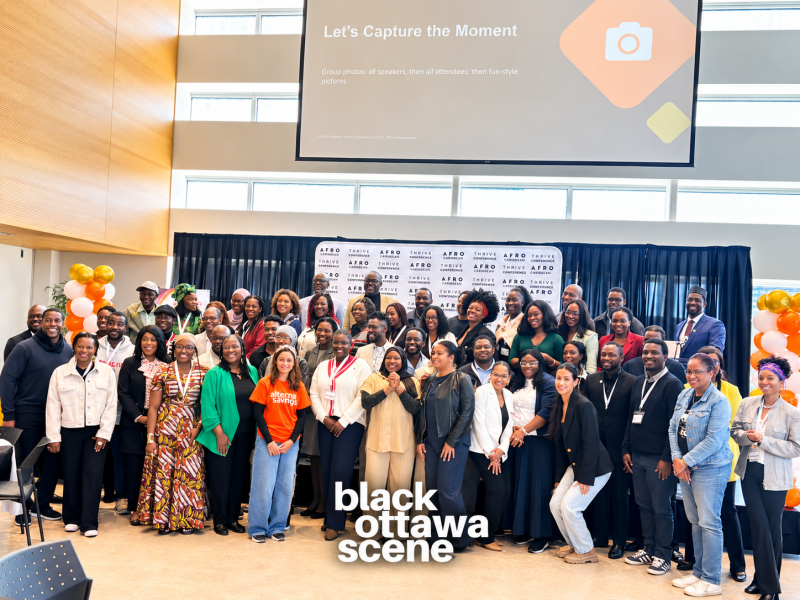
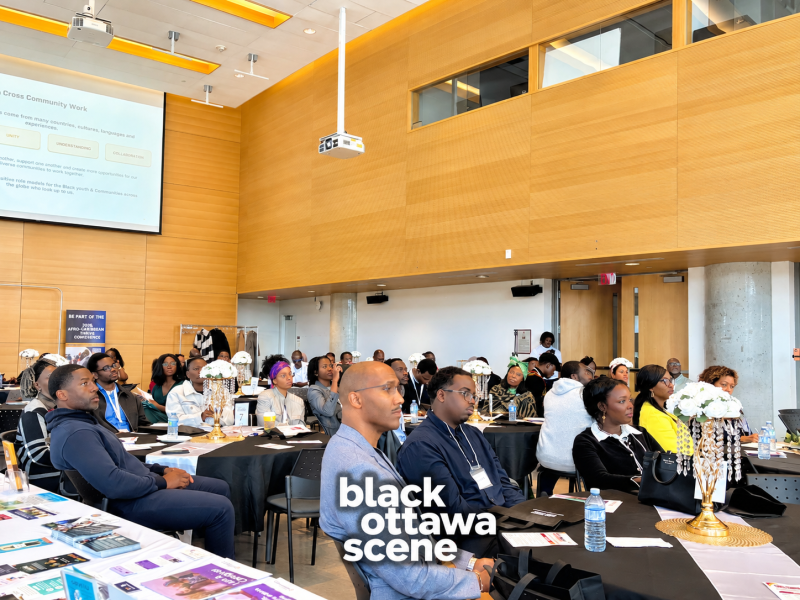
Black community leaders, educators, entrepreneurs and young professionals gathered at the University of Ottawa on Oct. 3 to discuss leadership, entrepreneurship, mentorship and pathways to economic and professional opportunities for Black Canadians.
The Afro-Caribbean Thrive Conference, organized by the Black Immigrant Thrive Coalition, brought together members of Ottawa’s Black and African-Caribbean communities to share experiences, build connections and explore ways to address barriers to career advancement and community development.
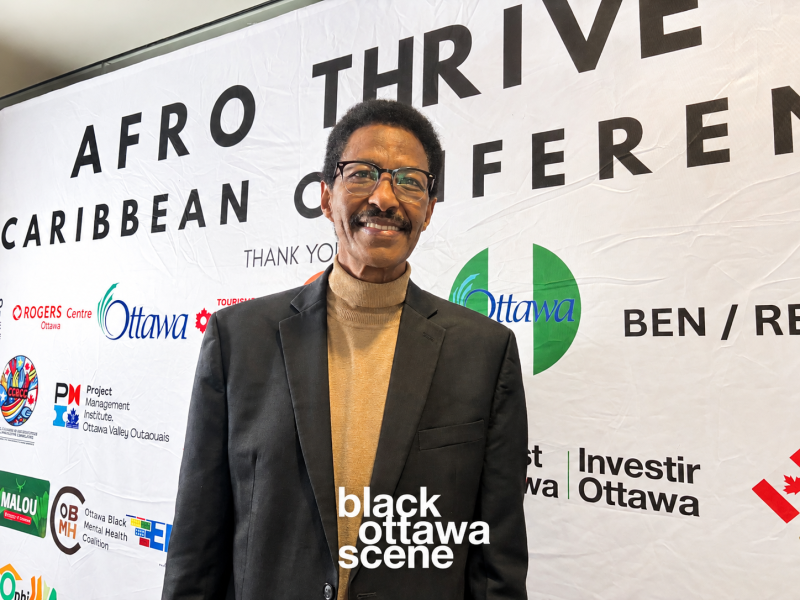
In an exclusive interview with The Black Ottawa Scene, Awad Ibrahim, a full professor at the University of Ottawa and vice-provost of equity, diversity and inclusive excellence, said future conferences should intentionally include decision-makers and institutional leaders.
Ibrahim said the conference could become an annual platform at the University of Ottawa where community members and decision-makers can have meaningful conversations about issues affecting Black communities.
He emphasized that institutional leaders should not simply attend events for a few minutes, but should spend time engaging with community members, building relationships and listening to their experiences.
In his keynote address, Ibrahim also placed Canada’s Black population within a broader historical context, emphasizing that Black people have been present in what is now Canada since well before Confederation in 1867.
He highlighted the community’s young population and stressed that excellence has always existed within Black communities.
“Black excellence has always been,” he said.
Ibrahim also cautioned against viewing social progress as a straight line. “Change is not a whiz bang. It doesn’t happen. It’s not something that you see. It is slow and takes time,” he said, adding that progress can move “up and down” and “back and forth.”
That emphasis on sustained progress and collective responsibility was echoed by Greg Fergus, a member of the House of Commons of Canada, who spoke about resilience and the role different generations have to play in advancing the community.
Fergus acknowledged that the continued fight for recognition and equal opportunity can be exhausting. He encouraged those who still have the energy to continue contributing, while also recognizing that leadership must evolve as new generations emerge.
He said people sometimes need to step back and allow another generation to take on leadership responsibilities.
“Do your best with what you have,” Fergus said.
Fred Sherman, CEO of Hill Solutions and strategic adviser to Jaku Konbit, spoke about entrepreneurship pathways and highlighted the role of entrepreneurs in creating economic opportunities while acknowledging the risks involved in leaving traditional employment.
Traditional employment, Sherman said, can provide predictable income, insurance and retirement benefits, giving families a degree of financial security. Entrepreneurship, however, can create opportunities for individuals to become employers and contribute to broader community economic development.
He pointed to a Black youth entrepreneurship and innovation program that has graduated more than 100 young Black entrepreneurs over the past three years.
Sherman said these entrepreneurs have established businesses across a range of sectors, including information technology, food services, automotive businesses, hair and beauty services and other industries.
He said entrepreneurship should not be viewed simply as starting a business. Rather, it involves identifying a problem or opportunity, organizing resources and taking financial risks to create economic or social value.
Sherman identified six principles that have influenced his entrepreneurial journey: creativity and innovation, courage, action, hard and smart work, adaptability and resilience.
Mentorship, he said, is particularly important in helping young entrepreneurs transform ideas into sustainable businesses.
He also pointed to the example of Viola Desmond, noting that her legacy included not only her role in Canada’s civil rights history, but also her experience as an entrepreneur and newspaper publisher.
Sherman said economic empowerment and social justice are interconnected, urging community members and institutions to create an ecosystem that supports young people as they move from job seekers to potential job creators.
Rasheedah Sulaiman, executive director of the Black Immigrant Thrive Coalition, described the organization’s origins as rooted in the experiences of Black immigrants navigating Canada’s employment system.
According to Sulaiman, the organization’s work is centred on connecting “people with people, people with resources, resources with opportunities and opportunities with growth.”
She said the coalition programs include youth career development, leadership training, public speaking, confidence-building and mentorship.
She added that the organization also works to expose young people to opportunities in sectors where Black representation may be limited.
Sulaiman said the coalition’s work is not limited to professional development. It also seeks to strengthen relationships among diverse Black communities and create opportunities for collaboration.
She encouraged community members and organizations to work together rather than focusing on their differences.
For Ibrahim, the next step is to ensure that conversations begun at conferences such as this one continue beyond the event.