

Thursday, July 30, 2026
Community Roundtable Sparks Dialogue on Improving Access to Justice for Black Communities
By Obasola Bamigbola, Local Journalism Initiative Reporter
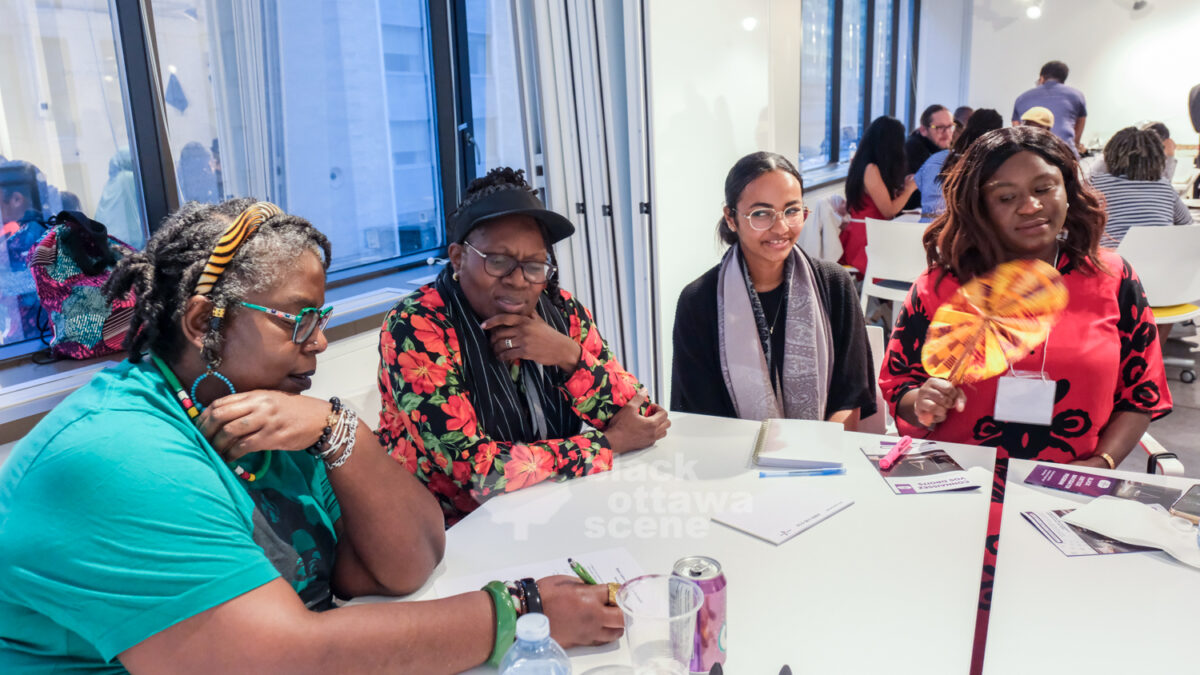
Community members, legal professionals, service providers, and advocates gathered at Impact Hub in downtown Ottawa on Thursday, July 30, for an evening of honest conversations about one of the most pressing issues facing Black communities-equitable access to justice.
Hosted by Jaku Konbit from 5 p.m. to 8 p.m., the inaugural Black Justice Community Roundtable Discussion created a space for participants to examine barriers within the justice system, share lived experiences, and collectively explore practical solutions that could strengthen trust and improve outcomes for Black residents across Eastern Ontario.
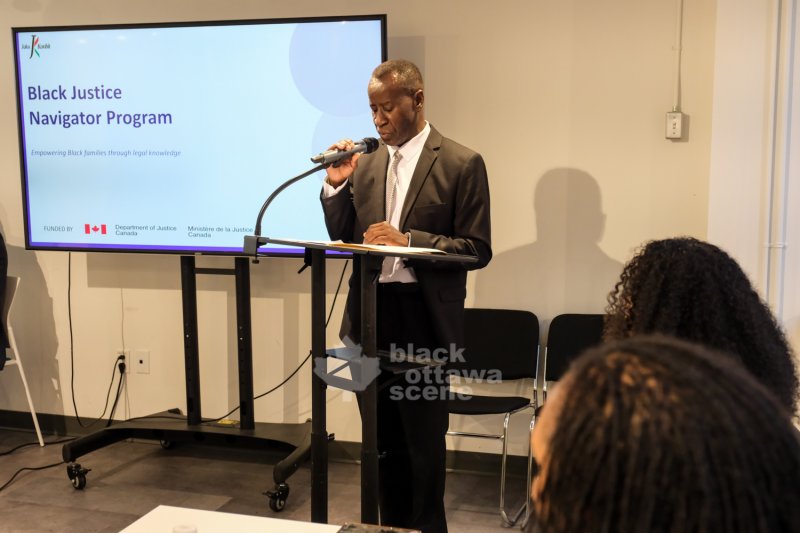
The event formed part of Jaku Konbit’s growing commitment to supporting Black communities in the National Capital Region through advocacy, education, and community-based programming. Central to the evening was the organization’s Black Justice Navigator Program, an initiative designed to help Black residents better understand their legal rights, navigate the justice system with confidence, and connect with housing, employment, and mental health supports.
Opening the program, Fred Sherman, Strategic Advisor to Jaku Konbit, welcomed attendees and reflected on the organization’s expanding impact within Ottawa’s Black community. He highlighted several of Jaku Konbit’s initiatives, including the recently launched Black Justice Navigator Program, describing it as an important step toward reducing systemic barriers and empowering community members to access justice more effectively.
Sherman then introduced Jaku Konbit President Ken Campbell, who welcomed participants to what he described as the organization’s first Black Justice Roundtable Discussion.
Campbell encouraged attendees to take an active role throughout the evening, emphasizing that meaningful change requires collaboration between community members, justice institutions, and organizations working on the ground. He noted that improving Black representation within the justice system and ensuring equitable treatment cannot be achieved by one organization alone, but through collective action and sustained community engagement.
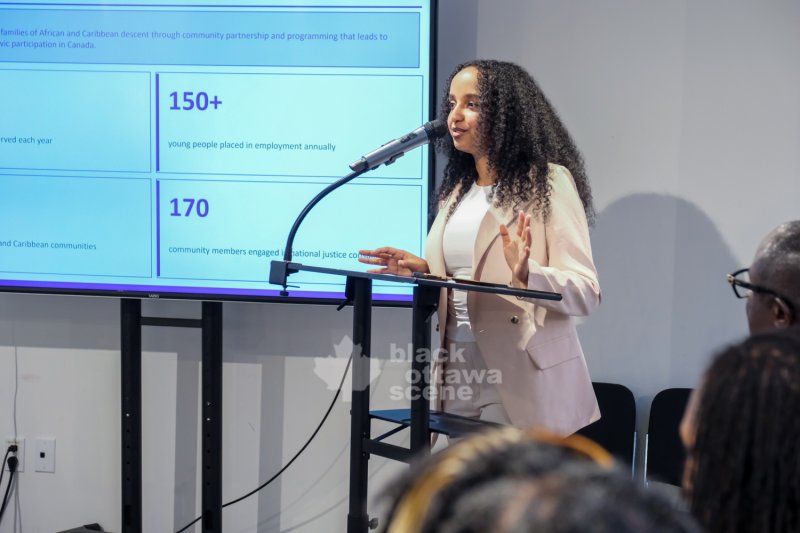
Providing an overview of the Black Justice Navigator Program, Gadise Geremew, Communications Officer at Jaku Konbit, shared statistics highlighting the organization’s recent work and outlined the program’s objectives.
She explained that the initiative seeks to increase understanding of legal rights and justice processes, improve navigation of the justice system for Black residents, strengthen connections to essential social services, and ultimately reduce the barriers that often prevent individuals from receiving fair outcomes.
Participants also learned about the program’s growing reach through presentations by Andrew Defor, Justice Navigator with Jaku Konbit.
Defor highlighted recent workshops delivered at Joyceville Institution in Kingston, where the team worked with 30 incarcerated participants alongside correctional officers and library staff. He also discussed a workshop conducted in partnership with the Youth Services Bureau (YSB), which engaged young people between the ages of 17 and 18, as well as frontline staff supporting youth in conflict with the justice system.
The keynote presentations shifted the conversation from program delivery to broader systemic issues.
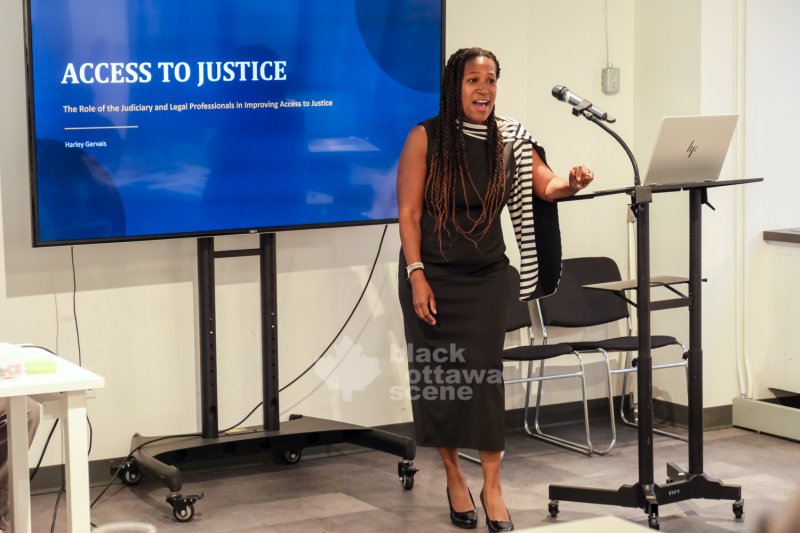
Hon. Harley Gervais, retired Justice of the Peace, lawyer, and Chief Executive Officer of The G-Eight, shared insights from her years in the legal profession during a presentation on The Role of the Judiciary and Legal Professionals in Improving Access to Justice. Drawing on her professional experience, she reflected on the responsibility of legal institutions to build public confidence while ensuring justice remains accessible to all communities.
Her remarks were followed by Amar-Kareem Guimba, Staff Lawyer with the Black Legal Action Centre, who explored the lived experiences of Black Canadians within the justice system. He spoke about the barriers many continue to face, including systemic challenges, unequal treatment, and the importance of community-informed legal advocacy. His presentation encouraged participants to consider not only the obstacles but also opportunities for reform and stronger partnerships.
Following the keynote sessions, Precious Iziomon, a Registered Social Worker and Project Consultant for the Black Justice Navigator Program, guided participants through the evening’s breakout discussions.
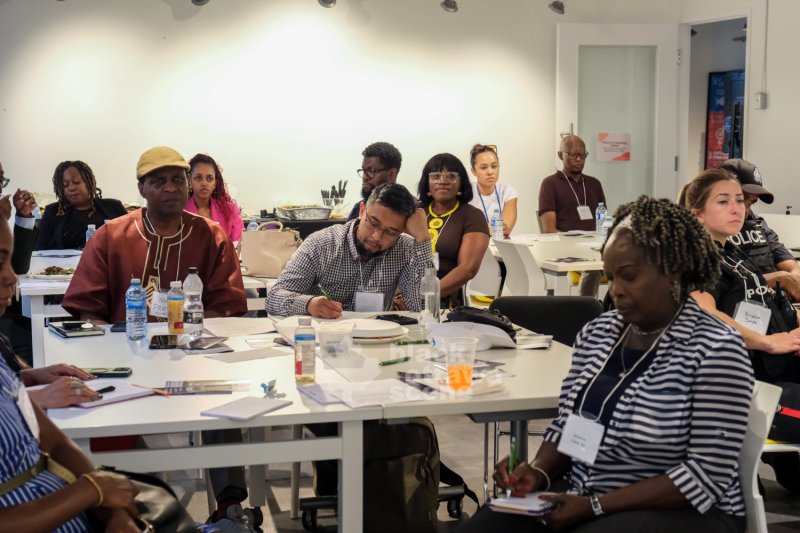
Working in six small groups, attendees spent 10 minutes discussing two central questions: how justice institutions and community organizations can collaborate more effectively, and what concrete steps are needed to improve access to justice for Black communities across Eastern Ontario.
Each group presented its recommendations and priorities. While ideas varied, several common themes emerged. Participants repeatedly pointed to a lack of dignity and respect experienced by many Black individuals within the justice system, identifying this as a major contributor to mistrust. Others emphasized the need for culturally responsive services, increased legal education, stronger community partnerships, and greater representation of Black professionals throughout the justice sector.
Rather than focusing solely on the challenges, participants demonstrated a shared commitment to identifying practical solutions capable of producing lasting change.
Closing the event, Fred Sherman thanked the speakers, facilitators, and participants for their willingness to contribute to an important community conversation. He encouraged attendees to remain engaged as the Black Justice Navigator Program continues to expand its work across the region.