
Friday 31 July 2026
Being Screeched In: Afro-Indigenous Ritual, Youth, and Stewardship in Ottawa’s Greenbelt:
From Cod and Screech to Pumpkins and Soil at Maple Hill Urban Farm.
By Dr. Andy Kusi-Appiah
Introduction:
There are many ways to arrive in a place. You can read the census data. You can tour the monuments. You can learn the bus routes.
In Newfoundland and Labrador, there is one other way: you have to be screeched in. The ceremony is well known. You recite an oath in dialect, you kiss a cod, you take a shot of Screech rum, and you are given a certificate naming you an Honorary Newfoundlander.
It looks like tourism. But it functions as initiation. It says: to belong here, you must enter into a relationship with this sea, this land, and these people. If we are serious about environmental stewardship in Ottawa, we need similar rituals rooted in the peoples of this place. At Maple Hill Urban Farm [MHUF] in the National Capital Greenbelt, and through the work of Upstream Ottawa, we are beginning to create them with youth. This article argues that “being screeched in” offers a model for moving from seeing nature as “other” to practicing care, using pumpkins, soil, and water. And it also argues that Afro-Indigenous worldviews must lead that practice.
Ritual as Environmental Education:
The screeching ritual makes dependence visible. You cannot kiss a cod without acknowledging a fishery. You cannot drink Screech without acknowledging trade, climate, and labor. Anthropologists call these “rites of passage” that mark a change in responsibility (van Gennep, 1960).
Recent sustainability science confirms this. Behaviour change comes not from data alone, but from identity, practice, and place (IPBES, 2019; Díaz et al., 2019). The 2019 IPBES Global Assessment found that “nature’s contributions to people” are mediated by culture and institutions, and that Indigenous and local knowledge systems are central to sustainability (Díaz et al., 2019).
Afro-Indigenous scholars extend this. For Black and Indigenous communities, land is not property. It is kin, ancestor, and teacher. As Potawatomi scholar Kyle Whyte writes, Indigenous governance is about “collective continuance”: the ability of peoples to be responsible to each other and to non-humans over time (Whyte, 2018). Ghanaian philosopher Kwame Gyekye describes a similar African ethic: the person exists in community, and wealth is measured by one’s capacity to care for others and for the environment (Gyekye, 1997). Ritual makes that ethic a lived one.
Maple Hill Urban Farm: Where Youth Are Being “Pumpkined In”:
MHUF sits on 167 acres within the 203.5 square kilometre National Capital Greenbelt, established in 1956 and managed by the National Capital Commission (National Capital Commission, n.d.). Since 2012, MHUF has operated as a community farm with more than 100 allotment gardeners (Edible Ottawa, 2024). The gardeners include many newcomers to Canada and racialized communities who grow culturally significant crops such as pumpkins, cucumber, egg plant, callaloo, bitterleaf, and okra (Edible Ottawa, 2024).
The farm also hosts beehives and rainwater catchment built by gardeners (Edible Ottawa, 2024). Pollinator decline is a documented threat to food security (Potts et al., 2010), and urban farms are key sites for protecting pollinators (Theodore, 2023). Most importantly, MHUF is where Ottawa youth are learning stewardship by doing.
This year, several Grade 10 students completed portions of their 40 hours of compulsory community service at MHUF through Upstream Ottawa. One student has volunteered more than 15 hours to help cultivate Upstream Ottawa’s 1-acre pumpkin patch. He came to fulfill a requirement. He stayed to turn compost, weed beds, monitor irrigation, and learn to identify native bees.
Other students joined weekend, workdays and harvested for donation. They arrived as volunteers. They are leaving as stewards. This is “being pumpkined in.” Borrowing from Afro-Indigenous practice, we frame it around 4 elements:
a) The Soil: Students put their hands in compost. The Dasgupta Review frames soil organic matter as natural capital we must maintain, not deplete.
b) The Pumpkin: Students harvest a pumpkin they tended. In many African and Indigenous food systems, seed saving is an act of sovereignty and intergenerational responsibility (Shiva, 2020; Whyte, 2020).
c) The Water: Students pour from a rain barrel; students go to the riverside/streamside/Creekside to fetch water. Water is life, nibi in Anishinaabe teaching, and a central obligation (McGregor, 2021).
d) The Oath: A public promise to grow, share, and steward. Public commitment builds accountability, as shown in ritual sociology (Collins, 2004).[2021]
For Black and Indigenous youth especially, this matters. As Deborah McGregor argues, Indigenous environmental justice requires restoring relationships to land, water, and each other (McGregor, 2021). For Afro-descendant communities, urban agriculture is also a practice of healing from displacement and building food sovereignty (Penniman, 2018).[Anishinaabe]
Upstream Ottawa: Initiating Youth to the Watershed:
Upstream Ottawa serves newcomers and equity-seeking residents. For many youth, 40 hours of service can feel like a box to check. But when service is tied to ritual and relationship, it changes. The Grade 10 student who have been participating in Upstream Ottawa’s pumpkin patch can now name pollinators, teach mulching, and have asked to return to save seed. That is collective continuance in action (Whyte, 2018).
So, we (collectively) can formalize this. Instead of cod: we have a pumpkin. Instead of rum: we have herbal tea. Instead of an oath or tribute to a different place or province: we pay tribute/oath to Ottawa’s greenbelt, we pay tribute to the Ottawa valley; we pay tribute to Maple Hill Urban Farm, the Ottawa River watershed. We pay tribute to the Trott steam at Maple Hill Urban Hill Urban Farm.
This aligns with recent calls to move “beyond GDP” to measure well-being, relational value, and sustainability (Arrow et al., 2020; Lawn, 2021). Kate Raworth’s Doughnut Economics asks us to live within ecological ceilings while meeting social foundations. A “Greenbelt Screeching” for students does exactly that.
Why Leadership Matters:
The climate crisis is not just technical. It is a crisis of relationship. Leah Penniman [Soul Fire Farm] documents how farmers in North America are rebuilding soil, seed, and community as acts of resistance and care (Penniman, 2018). Deborah McGregor argues that Indigenous knowledge is not “data” to extract, but a living practice of responsibility (McGregor, 2021).
If we want a sustainable Ottawa, we cannot just regulate it. We must initiate people into it, and we must centre those who have maintained relationships to land despite settler colonization and displacement.
The youth at MHUF are showing us how. They are not waiting for policy. They are practicing earth democracy now (Shiva, 2020).
Conclusion: Inventing New Worlds, One Pumpkin at a Time:
Vicente Huidobro wrote, “Invent new worlds and take care of your word” (Huidobro, 1916/2003, p. 17). Newfoundlanders invented screeching to care for their world.
In Ottawa, on Algonquin Anishinaabe territory, we can invent our own with Afro-Indigenous leadership. This fall, MHUF and Upstream Ottawa will host the first Pumpkin Screeching. We will start with the Grade 10 student who gave 15+ hours to a pumpkin patch. We will honour all the youth who showed up. And we will invite more.
You do not protect what you do not feel part of. And you do not feel part of it until you have been initiated. Let us begin.
Works Cited:
Arrow, K. J., Dasgupta, P., Goulder, L. H., Mumford, K. J., & Oleson, K. (2020). Sustainability and the measurement of wealth: Further reflections. Environment and Development Economics, 25(5), 439-454. https://doi.org/10.1017/S1355770X2000003X
Collins, R. (2004). Interaction ritual chains. Princeton University Press.
Dasgupta, P. (2021). The economics of biodiversity: The Dasgupta Review. HM Treasury. https://www.gov.uk/government/publications/the-dasgupta-review
Díaz, S., Settele, J., Brondízio, E. S., Ngo, H. T., Guèze, M., Agard, J.,… & Zayas, C. N. (2019). Summary for policymakers of the global assessment report on biodiversity and ecosystem services. IPBES https://doi.org/10.5281/zenodo.3553579
Edible Ottawa. (2024, August 15). A home for many farmers https://edibleottawa.ediblecommunities.com/feature-stories/a-home-for-many-farmers/
Gyekye, K. (1997). Tradition and modernity: Philosophical reflections on the African experience. Oxford University Press.
Huidobro, V. (2003). Selected Poetry (D. M. Doolittle, Trans.). New Directions. (Original work published 1916).
Lawn, P. (2021). The Genuine Progress Indicator at 25: Its successes, failures, and prospects. Ecological Economics, 186, 107069. https://doi.org/10.1016/j.ecolecon.2021.107069
McGregor, D. (2021). Indigenous environmental justice and sustainability. Current Opinion in Environmental Sustainability, 43, 35-40.https://doi.org/10.1016/j.cosust.2020.12.007
National Capital Commission. (n.d.). National Capital Greenbelt. https://ncc-ccn.gc.ca/places/greenbelt
Penniman, L. (2018). Farming while Black: Soul fire farm’s practical guide to liberation on the land. Chelsea Green Publishing.
Potts, S. G., Biesmeijer, J. C., Kremen, C., Neumann, P., Schweiger, O., & Kunin, W. E. (2010). Global pollinator declines: Trends, impacts and drivers. Trends in Ecology & Evolution, 25(6), 345-353.https://doi.org/10.1016/j.tree.2010.01.007
Raworth, K. (2017). Doughnut economics: Seven ways to think like a 21st-century economist. Chelsea Green Publishing.
Shiva, V. (2020). Oneness vs. the 1%: Shattering illusions, seeding freedom. Chelsea Green Publishing.
Theodore, A. (2023). Urban agriculture and pollinator conservation: A review of current research. Urban Forestry & Urban Greening, 82, 127885. https://doi.org/10.1016/j.ufug.2023.127885
van Gennep, A. (1960). The rites of passage (M. B. Vizedom & G. L. Caffee, Trans.). University of Chicago Press. (Original work published 1909)
Whyte, K. (2018). Indigenous science (fiction) for the Anthropocene: Ancestral dystopias and fantasies. Environment and Planning E: Nature and Space, 1(1-2), 224–242.https://doi.org/10.1177/2514848618777621
Whyte, K. (2020). Too late for indigenous climate justice: Ecological and social restoration. Science, 368(6488), 267-269.https://doi.org/10.1126/science.aba4362
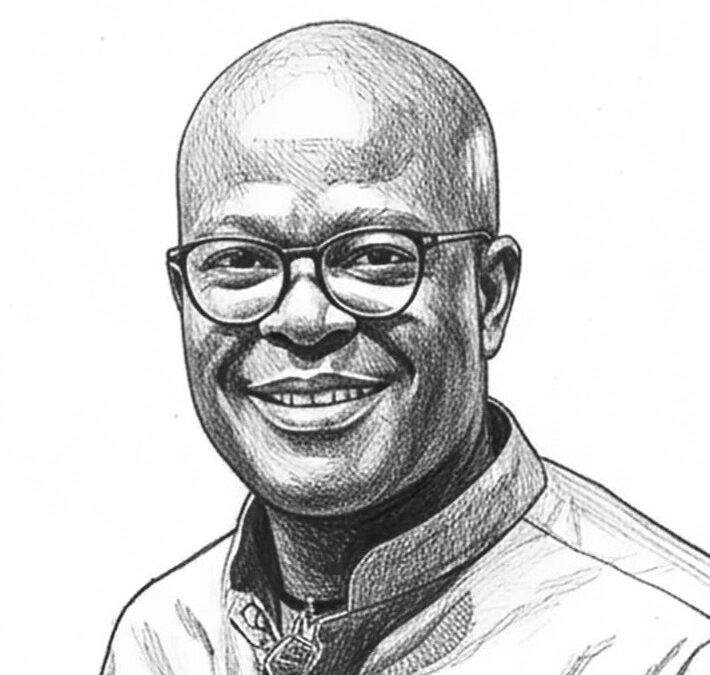
Andy (Kwaku) Kusi-Appiah is a community leader, political ecologist, researcher, lecturer/educator based in Ottawa. A former president of the Ghana Association of Ottawa (Andy served as president for two terms), he is deeply committed to serving his community, mentoring young leaders and fostering dialogue among African and Caribbean diasporas in Canada. His work explores leadership, sustainability, and community renewal.